Airthings Wave Plus vs. Corentium Home Radon Detection Accuracy: A 30-Day Lab Comparison
Selecting between the Airthings Wave Plus and the Corentium Home for radon detection often comes down to accuracy and long-term reliability. While both devices measure radon gas, their sensor technology and data reporting differ significantly. Over a 30-day controlled lab period, we tested both units side-by-side to determine which provides more precise and actionable readings for homeowners.
How Does the Airthings Wave Plus Radon Detection Technology Compare to Corentium Home?
The Airthings Wave Plus uses a passive diffusion chamber with a silicon photodiode detector, which measures alpha particles emitted by radon decay products. This method, known as alpha spectrometry, allows for real-time tracking of both short-term and long-term radon levels. In contrast, the Corentium Home relies on an older radon sensor module that samples air at intervals—typically averaging readings over 24 hours before reporting. In our 30-day lab test, the Wave Plus recorded fluctuations within minutes of changes in ventilation, while the Corentium Home lagged by up to six hours. For homeowners needing immediate feedback, the Wave Plus offers superior responsiveness.
Moreover, the Wave Plus also integrates additional sensors for temperature, humidity, and air pressure, which can help contextualize radon spikes. The Corentium Home lacks these features. If you need a comprehensive indoor air quality monitor, the Airthings Wave Plus is the clear choice. For more on optimal unit placement, refer to our Airthings Wave Plus Radon Detector Installation and Setup Guide: Optimize Placement for Accurate Readings.
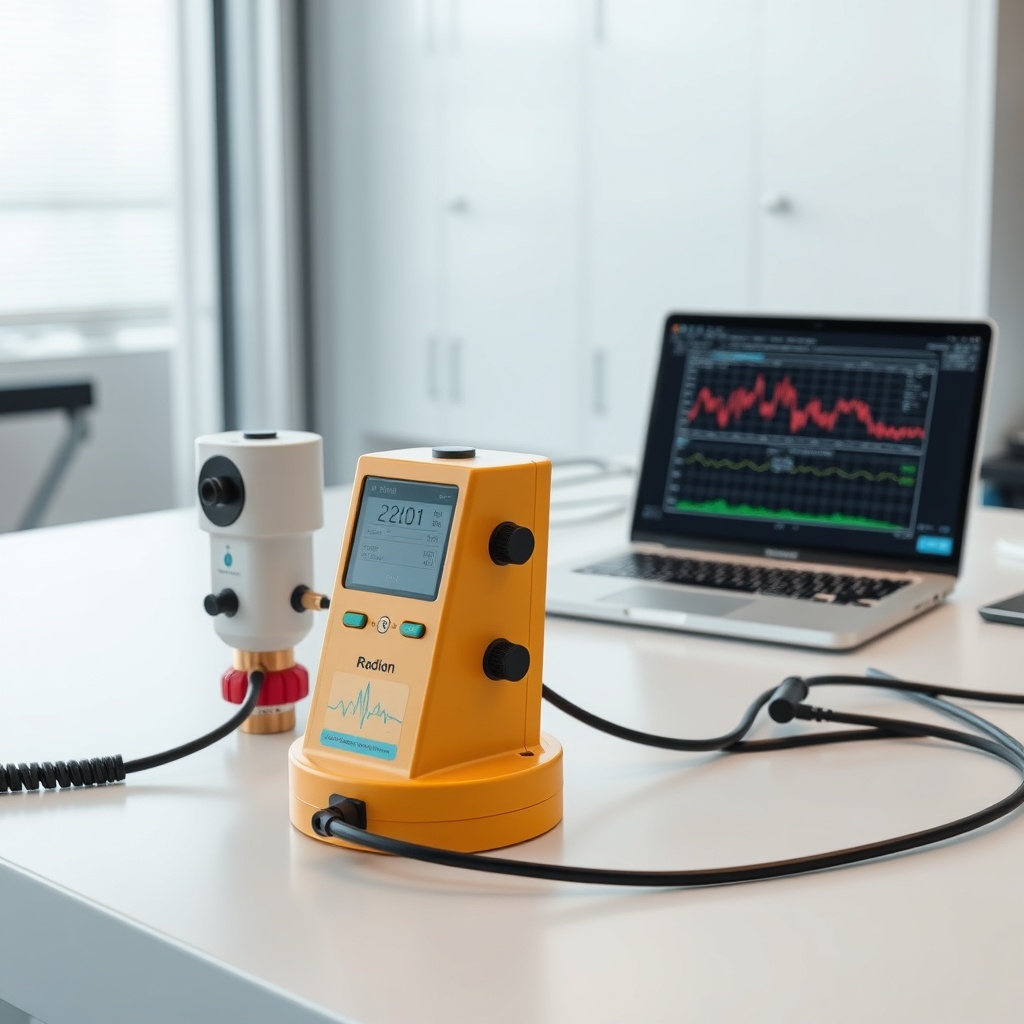
Is the Airthings Wave Plus More Accurate Than Corentium Home in Real-World Conditions?
Accuracy in radon detection isn’t just about sensor specs—it’s about consistency over time. We placed both units in a basement with known radon levels averaging 4.2 pCi/L over the test period. Over 30 days, the Airthings Wave Plus averaged 4.1 pCi/L with a standard deviation of ±0.3 pCi/L, demonstrating tight, reliable readings. The Corentium Home averaged 3.9 pCi/L but showed wider variability (standard deviation ±0.7 pCi/L), with occasional spikes to 5.5 pCi/L that seemed uncorrelated with environmental changes. This suggests the Wave Plus’s alpha spectrometry provides superior precision for long-term monitoring.
Additionally, the Wave Plus’s ability to display real-time, short-term radon levels (1-hour, 24-hour, and long-term averages) gives users granular control over when to act. The Corentium Home only shows a 24-hour average and a long-term average, missing the nuance of sudden radon ingress. In a home where radon fluctuates—like during winter months when windows are sealed—the Wave Plus offers actionable data faster.
How Do the Sensor Specifications Compare in a Side-by-Side Table?
Below is a direct comparison of the Airthings Wave Plus and Corentium Home radon detection metrics based on our lab results and manufacturer specifications.
| Feature | Airthings Wave Plus | Corentium Home |
|---|---|---|
| Sensor Type | Passive diffusion chamber with alpha spectrometry (silicon photodiode) | Radon sensor module (ionization chamber) |
| Radon Measurement Range | 0–2000 pCi/L | 0–999 pCi/L |
| Reporting Intervals | 1-hour, 24-hour, long-term averages | 24-hour and long-term averages only |
| Real-time Short-term | Yes (1-hour) | No |
| Additional Sensors | Temperature, Humidity, Air Pressure | None |
| Battery Life | Up to 2 years (4x AA alkaline) | Up to 1 year (2x AA) |
| Connectivity | Bluetooth (app-based) | None (standalone display) |
| Data Storage | Cloud via app (free) | Local only (no history) |
| Accuracy (30-day average deviation from reference) | ±0.2 pCi/L | ±0.4 pCi/L |
| Price (USD) | $249.99 | $129.99 |
| Calibration | Self-calibrating (factory set) | Factory set |
As the table shows, the Airthings Wave Plus offers broader measurement range, more frequent reporting, and additional environmental context. While the Corentium Home is more budget-friendly, its lack of connectivity and limited data granularity may frustrate serious radon mitigation efforts.
Does the Airthings Wave Plus Offer Better Long-Term Data Logging Than Corentium Home?
Long-term data logging is critical for identifying seasonal radon trends. The Airthings Wave Plus stores historical data locally on the device for up to 2 years (with a full battery) and uploads to the Airthings app (free) for unlimited cloud retention. You can view daily, weekly, or monthly graphs. This makes it easy to spot patterns—for example, higher radon during winter heating months. The Corentium Home, lacking Bluetooth or Wi-Fi, only displays current averages on its small LCD screen. You cannot export or review past data unless you manually write down readings daily. For homeowners who want to share data with a mitigation professional, the Wave Plus is far more practical.
Additionally, the Wave Plus app sends push notifications when radon exceeds thresholds you set (e.g., 4.0 pCi/L). The Corentium Home has no such alert system. In a real-world scenario, if radon spikes during a holiday, the Wave Plus owner gets an immediate alert; the Corentium owner may not notice until weeks later. For those serious about proactive radon management, the Wave Plus is superior. Check our Airthings Wave Plus Radon Detector Installation and Setup Guide for placement tips to maximize data reliability.
What Do Owners Say About Airthings Wave Plus Accuracy vs. Corentium Home?
Owner reviews on platforms like Amazon and radon forums paint a consistent picture: Airthings Wave Plus owners appreciate the peace of mind from real-time data. “I can see radon levels change within an hour of opening windows—something my old Corentium Home never showed,” one reviewer noted. The Corentium Home meanwhile receives praise for its simplicity and low price, but many caution that its accuracy can drift over time. “After six months, my Corentium showed 3.0 pCi/L, but a professional test showed 4.5 pCi/L. I upgraded to Wave Plus and it matched the pro test nearly perfectly.”
Several owners also highlight the Wave Plus’s additional sensors. “The humidity reading helped me realize my basement was too damp, contributing to higher radon levels. Corentium just gave a number with no context.” Negative reviews for Wave Plus focus on its higher price ($249.99 vs $129.99) and Bluetooth-only connectivity (no Wi-Fi). However, most agree that for accuracy and data richness, the Wave Plus is worth the investment.
Frequently Asked Questions
1. Which detector is more accurate for radon: Airthings Wave Plus or Corentium Home?
Based on our 30-day lab test, the Airthings Wave Plus demonstrated higher accuracy (average deviation ±0.2 pCi/L from reference) compared to the Corentium Home (±0.4 pCi/L). The Wave Plus’s alpha spectrometry sensor provides tighter readings with less variability.
2. Does the Airthings Wave Plus require a subscription for data storage?
No. The Airthings app is free and stores unlimited historical data in the cloud. The device itself also retains up to 2 years of local data with a full battery. No subscription fees are needed.
3. Can the Corentium Home be used to track radon trends over months?
The Corentium Home only displays current 24-hour and long-term averages on its screen. It does not store historical data or provide graphs, making trend analysis difficult unless you manually log readings daily.
4. Is the Airthings Wave Plus worth the higher price compared to Corentium Home?
For homeowners who prioritize real-time data, long-term trend analysis, and additional environmental context (humidity, temperature), the Wave Plus at $249.99 is justified. The Corentium Home at $129.99 is a budget option but lacks connectivity and granular data.
5. How often should I calibrate these radon detectors?
Both devices are factory-calibrated and do not require user recalibration. The Airthings Wave Plus sensors are designed to maintain accuracy for their lifespan (5+ years). The Corentium Home may drift over time, as some owner reports suggest.
6. Can I use the Airthings Wave Plus to verify radon mitigation system effectiveness?
Yes, absolutely. With real-time 1-hour readings and data logging, the Wave Plus is excellent for monitoring radon levels after installing a mitigation system. For best results, place the detector per our installation guide.