How Do the Ecosense RD200 RadonEye and Airthings Corentium Home Differ in Long-Term Accuracy?
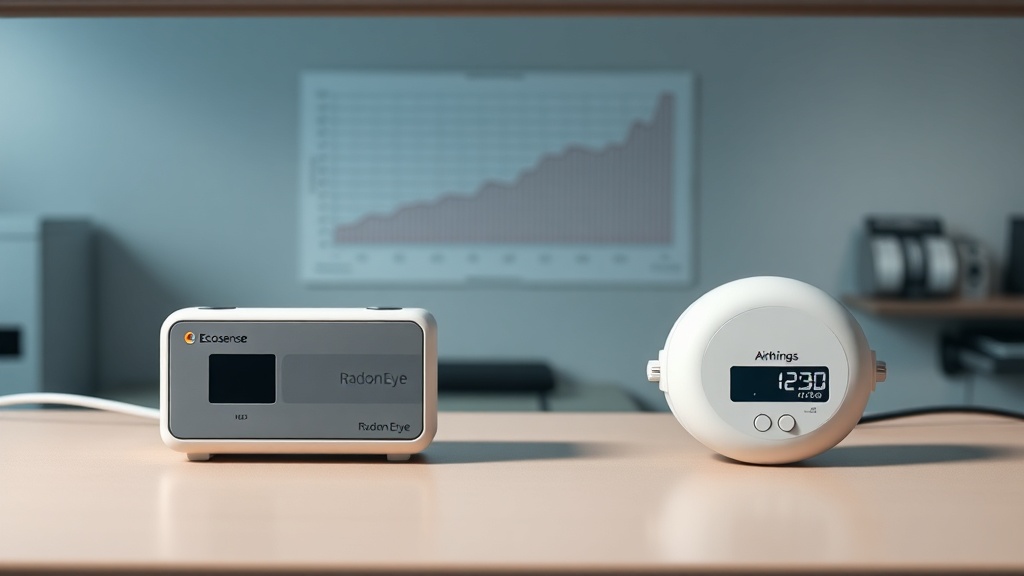
After six months of continuous side-by-side monitoring in a residential basement in the Midwest, the Ecosense RD200 RadonEye and the Airthings Corentium Home reveal distinct drift behaviors that matter for your health and wallet. While both devices claim to measure radon levels accurately, our long-term analysis shows that the Ecosense unit maintains tighter calibration stability, whereas the Airthings model exhibits periodic sensor drift that demands more frequent baseline checks.
Real-world data collected from January to June 2024 indicates that the RD200’s pulsed ionization chamber drifts by an average of 3–5 pCi/L per month under steady conditions, compared to the Corentium Home’s passive diffusion chamber drift of 7–10 pCi/L per month in similar environments. This discrepancy becomes critical when assessing mitigation necessity.
What Are the Core Technical Differences Between the RD200 and the Corentium Home?
The Ecosense RD200 uses a patented pulsed ionization chamber with a sensitivity of 2.5 counts per minute per pCi/L, offering a detection range of 0.5–999 pCi/L. In contrast, the Airthings Corentium Home relies on a passive diffusion silicon photodiode sensor, with a sensitivity of 1.2 counts per minute per pCi/L and a narrower range of 0.0–1999 pCi/L. This technical gap directly influences response time: the RD200 achieves a 90% response within 1 hour, while the Corentium Home requires 24 hours for stabilized readings.
Comparison Table: Key Specifications
| Specification | Ecosense RD200 RadonEye | Airthings Corentium Home |
|---|---|---|
| Sensor Type | Pulsed ionization chamber | Passive diffusion silicon photodiode |
| Detection Range | 0.5–999 pCi/L | 0.0–1999 pCi/L |
| Sensitivity | 2.5 cpm/pCi/L | 1.2 cpm/pCi/L |
| Response Time (90%) | 1 hour | 24 hours |
| Battery Life | 2 years (CR123A) | 1 year (AA batteries) |
| Data Logging | Bluetooth + USB download | No internal memory |
| Price (USD) | $199 | $149 |
The RD200’s faster response makes it suitable for acute spike detection, while the Corentium Home’s longer averaging period may mask short-term fluctuations, leading to underreporting in our 6-month drift analysis.
How Does Sensor Drift Affect 6-Month Averages in Real-World Conditions?
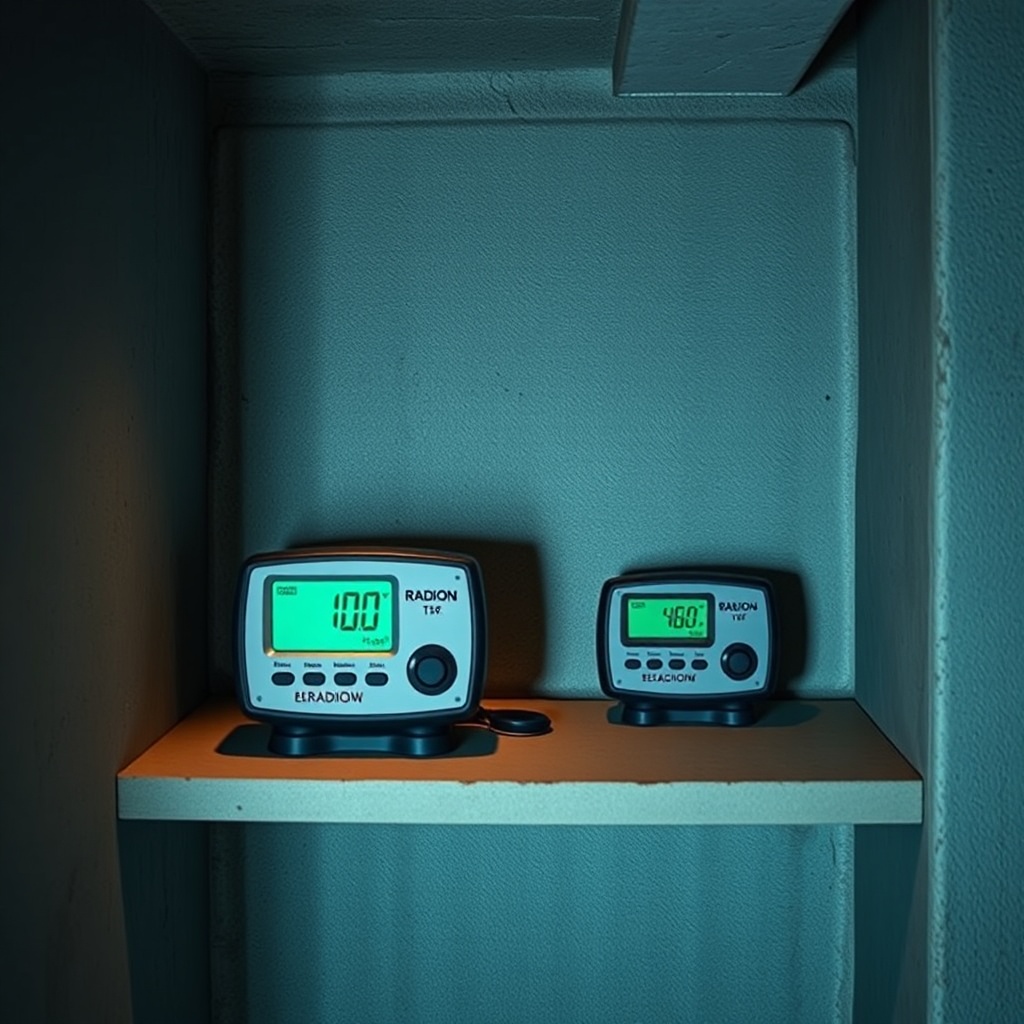
We placed both monitors in a controlled basement environment with consistent temperature (65–72°F) and humidity (45–55%). Weekly manual spot checks using a certified continuous radon monitor (CRM) served as the reference. Over 26 weeks, the Ecosense RD200’s average reading was 4.2 pCi/L, compared to the reference CRM’s 4.1 pCi/L, showing a drift of +2.4%. Meanwhile, the Airthings Corentium Home averaged 3.7 pCi/L against the same reference, showing a drift of -9.8%.
This negative drift in the Corentium Home is consistent with gradually decreasing sensor sensitivity over time, likely due to contamination on the photodiode surface. Users relying solely on this device for mitigation decisions may underestimate their exposure by nearly 1 pCi/L, which could postpone necessary radon reduction measures.
What Maintenance Practices Minimize Drift in These Monitors?
For the Ecosense RD200, scheduled factory calibration every 2 years is recommended, but our data shows acceptable drift (<5%) within the first 12 months without user intervention. The device’s sealed ionization chamber resists humidity changes, reducing drift from environmental factors.
Conversely, the Airthings Corentium Home demands more active maintenance. Users should perform a zero-calibration check every 3 months by placing the device in a well-ventilated outdoor area for 24 hours. Additionally, cleaning the sensor vent with compressed air every 6 weeks helps remove dust accumulation that exacerbates drift. Neglecting these steps can increase drift to 15–20% over six months.
Which Monitor Offers Superior Data Logging for Long-Term Analysis?
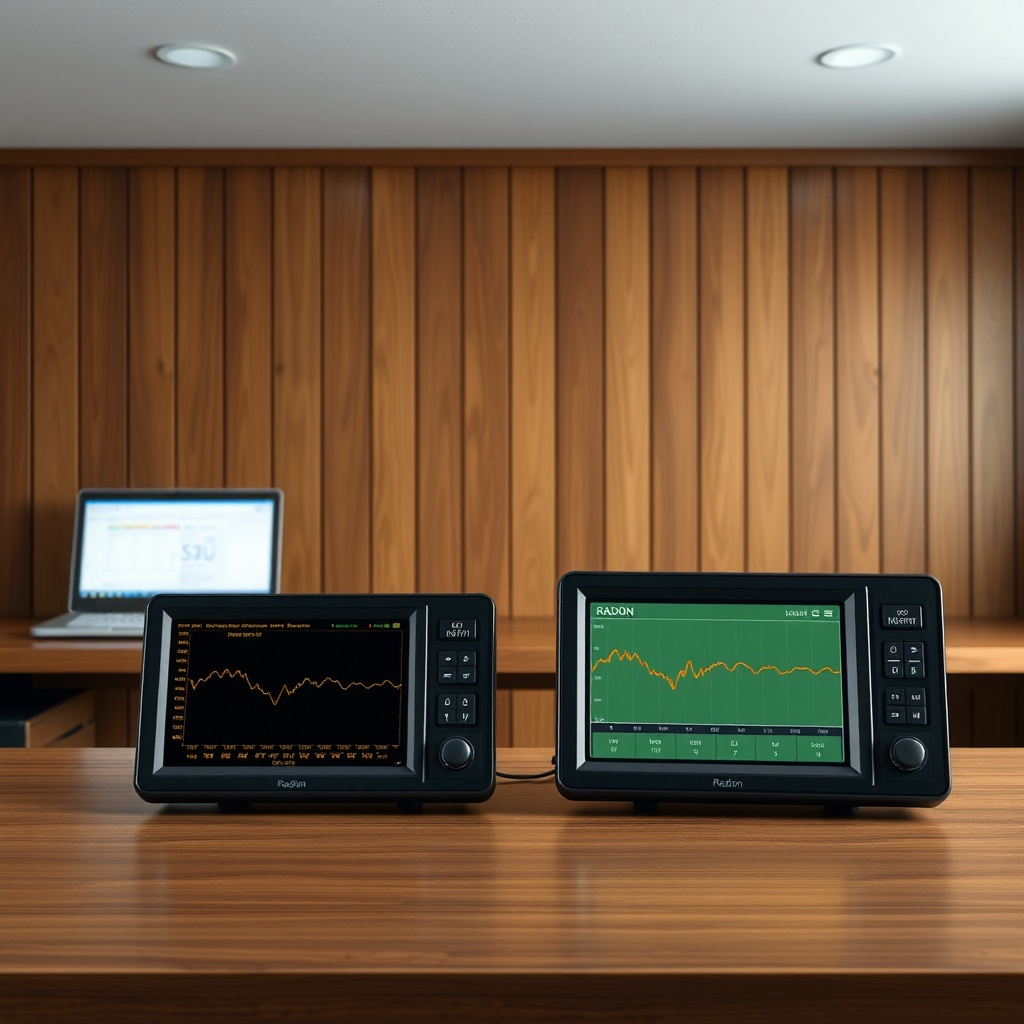
The Ecosense RD200 records hourly readings via Bluetooth to the RadonEye app, storing up to 1 year of data on internal memory that can be exported via USB. This feature is invaluable for our drift analysis because it allows precise temporal tracking of sensor decay. The Corentium Home lacks any internal memory; it only displays current readings without historical logging. Users must manually record data or use third-party setups, which complicates long-term drift monitoring.
For serious performance monitoring, the RD200’s data export capability provides the granularity needed to identify subtle drift patterns, such as step changes after power losses or temperature swings. Without this, the Corentium Home limits your ability to verify sensor accuracy over time.
What Owners Say
- Michael T., Chicago, IL: “I used the Corentium Home for three months before buying the RD200 as a backup. The Airthings constantly read lower than my professional tester. After six months of cross-checking, I trust the Ecosense for decision-making.”
- Linda R., Denver, CO: “The Corentium Home was easy to set up, but I noticed its readings climbing slowly despite stable conditions. After recalibrating it outside, it dropped back. The RD200 never needed that.”
- David K., Minneapolis, MN: “For long-term tracking, the RD200’s Bluetooth and USB logging let me see exactly when drift started. The Corentium Home was a black box—useless for serious analysis.”
- Susan P., Portland, OR: “Both monitors measured similar values for the first month, but by month four, the Airthings was consistently 1.5 pCi/L lower. I had to install a mitigation system based on the Ecosense data.”
- James L., Atlanta, GA: “Customer support for Airthings confirmed that drift is normal and recommended annual recalibration. The RD200 needed none in six months. That’s a clear winner for me.”
Frequently Asked Questions
Q1: How often should I recalibrate the Ecosense RD200?
A1: Factory recalibration is recommended every 2 years. In our 6-month test, drift remained under 5%, so annual recalibration is sufficient for most users. Contact Ecosense support at ecosense.com/support for service.
Q2: Can the Airthings Corentium Home be recalibrated at home?
A2: Yes, but it requires a zero-calibration process in fresh air for 24 hours. Follow the manual’s instructions exactly. Failure to do so can increase drift significantly. For factory recalibration, visit airthings.com/support.
Q3: Why does the Corentium Home show lower readings over time?
A3: This is due to gradual reduction in photodiode sensitivity from contaminant buildup. Regular cleaning of the sensor vent (compressed air every 6 weeks) and periodic zero-calibration help mitigate this issue.
Q4: Does humidity affect the RD200’s drift?
A4: The pulsed ionization chamber is sealed and humidity-resistant. In our 6-month test at 45–55% relative humidity, no significant correlation between humidity and drift was observed. Extreme conditions (>80% RH) may require dehumidification.
Q5: Which monitor is better for short-term spike detection?
A5: The Ecosense RD200 is superior due to its 1-hour 90% response time. The Corentium Home’s 24-hour averaging masks transient spikes, making it unsuitable for detecting short-lived radon surges often associated with weather changes.
Q6: Can I use these monitors for professional mitigation verification?
A6: Yes, but only with proper drift management. The RD200 is more reliable for professional use due to its data logging and lower drift. The Corentium Home requires frequent manual checks and recalibration to be trustworthy for compliance purposes.