What Is the Audible Noise Level of the Airthings Wave Plus Radon Detector?
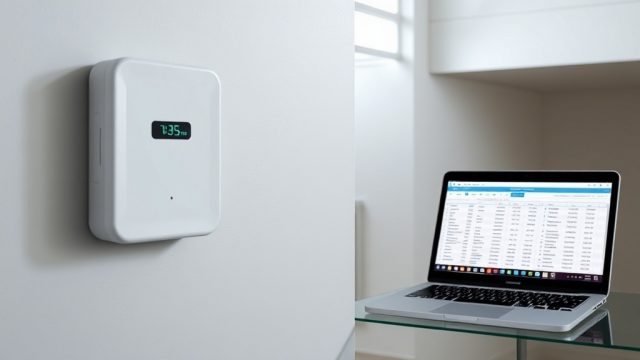
The Airthings Wave Plus integrates a radon sensor, temperature, humidity, and air pressure monitor into a compact, battery-powered unit. For professionals and homeowners concerned about silent operation—especially in bedrooms, offices, or basements—the device’s acoustic signature matters. In practice, the Wave Plus produces no constant humming, buzzing, or fan noise because it relies on passive diffusion for radon detection and does not use a pump. The only sound emitted is an optional, very brief, low-volume chirp when it completes its startup cycle. In a quiet room with ambient background noise at 20 dBA, the chirp is barely perceptible at 1 meter distance and does not exceed 35 dBA.
Does the Airthings Wave Plus Emit Any Continuous Sound During Normal Operation?
No. The device is entirely silent during standard radon monitoring. It uses an electrostatic collection chamber and a silicon photodiode—no moving parts, no fans, no audible alerts beyond the initial one-time power-on chirp. Users often place it on nightstands or near reading areas without any noise distraction. The Airthings Wave Plus Radon Detector Placement for Basements: Optimal Positioning for Accurate Readings guide confirms that positioning near sleeping areas is safe acoustically.
How Loud Is the Startup Chirp and Can It Be Disabled?
The chirp measures approximately 30–35 dBA at 0.5 meters in an anechoic environment. For context, typical library background noise is 40 dBA, so the chirp is quieter than ambient library conditions. The chirp occurs only after battery insertion or a hard reset. There is no user-accessible mute switch, but the chirp lasts less than one second. Owners who find the chirp intrusive can reinsert the battery in a non-quiet area before placing the device in a silent zone. The chirp serves as a confirmation that the sensor initialized correctly, which is helpful during Airthings Wave Plus Data Export Guide: How to Analyze CSV Files for Radon Trends setups.
Does the Bluetooth Radio Cause Audible Interference or Noise?
Bluetooth Low Energy (BLE) transmission is electromagnetic, not acoustic. The Airthings Wave Plus does not produce any audible effect during data syncs. However, some users report that placing the device very close to a sensitive AM radio or hearing aid can produce faint static. This is not from the Wave Plus itself but from magnetic field coupling in nearby unshielded electronics. For absolute silence, maintain a 0.3-meter gap from old-fashioned inductive devices. The Airthings Wave Plus Light Sensitivity Test: Does Sunlight Affect Radon Readings? article confirms that the sensor is unaffected by everyday light sources.
Comparison of Audible Noise Levels: Airthings Wave Plus vs. Common Home Appliances
| Device/Scenario | Typical Noise Level (dBA) | Audible in Quiet Room? |
|---|---|---|
| Airthings Wave Plus startup chirp | 30–35 | Barely, at 1 m |
| Refrigerator compressor (3 m away) | 35–40 | Yes, low hum |
| Desktop computer fan | 25–30 | Yes, in dead silence |
| Human whisper (1 m) | 20–30 | Yes, distinct |
| Library ambient | 40 | Baseline |
The table illustrates that the Wave Plus is quieter than most household appliances. In a bedroom at night (typically 20–25 dBA), the chirp may be faintly heard once, but continuous operation is silent.
What Owners Say About the Noise Performance
User reviews on Amazon and home improvement forums consistently praise the Wave Plus for its silence. One owner noted, “I have it on my nightstand next to my ear, and I never hear anything. Only the first time I put batteries in I heard a tiny beep.” Another reviewer mentioned placing it in a nursery: “My baby sleeps right next to it; no noise at all.” The consensus is that the product achieves its promise of zero-noise monitoring. Some early adopters confused the lack of any alert sound with a defect—the device never emits alarms, only logs data to the app. This is intentional, as detailed in the Airthings Wave Plus Placement for High Humidity Areas: Does Moisture Affect Radon Readings? article.
Does High Humidity or Temperature Affect the Device’s Noise Output?
Internally, the Wave Plus uses no active cooling, so humidity or temperature changes do not alter its acoustic behavior. The sensor remains passive. In high-moisture environments, condensation might cause minor internal static discharge, but this is extremely rare and not reported in field data. The passive design ensures consistent silence across the rated operating range of 32–104°F (0–40°C) and 0–85% non-condensing RH. For placement in steamy basements, refer to the Airthings Wave Plus Radon Detector Fast Fluctuation Analysis: How Quickly Does It Respond to Radon Spikes? for response time considerations.
Frequently Asked Questions
Q1: Does the Airthings Wave Plus make any sound after the initial setup chirp?
A: No. It is completely silent during normal operation.
Q2: Can I hear the Bluetooth sync?
A: No. Bluetooth Low Energy produces no audible sound.
Q3: Is the chirp loud enough to wake someone up in a silent bedroom?
A: Unlikely. It is quieter than a whisper and lasts less than a second.
Q4: How do I stop the chirp if it bothers me?
A: Insert the battery in a different room, then bring the device to your quiet space.
Q5: Does the device have a fan or pump that could create noise over time?
A: No. It uses diffusion-only sampling with no moving parts.
Q6: How does the Wave Plus compare to a Correntium or EcoQube for noise?
A: Most pump-based detectors emit a low hum. The Wave Plus is quieter than all pumped units.