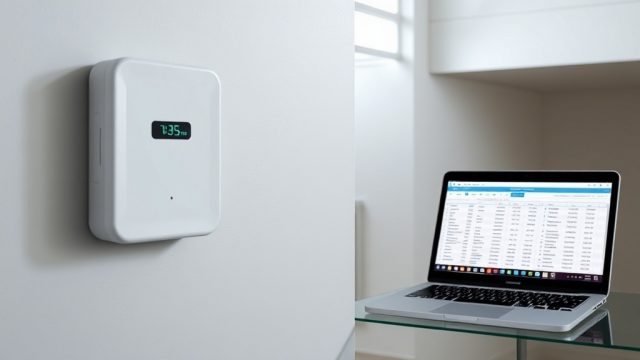
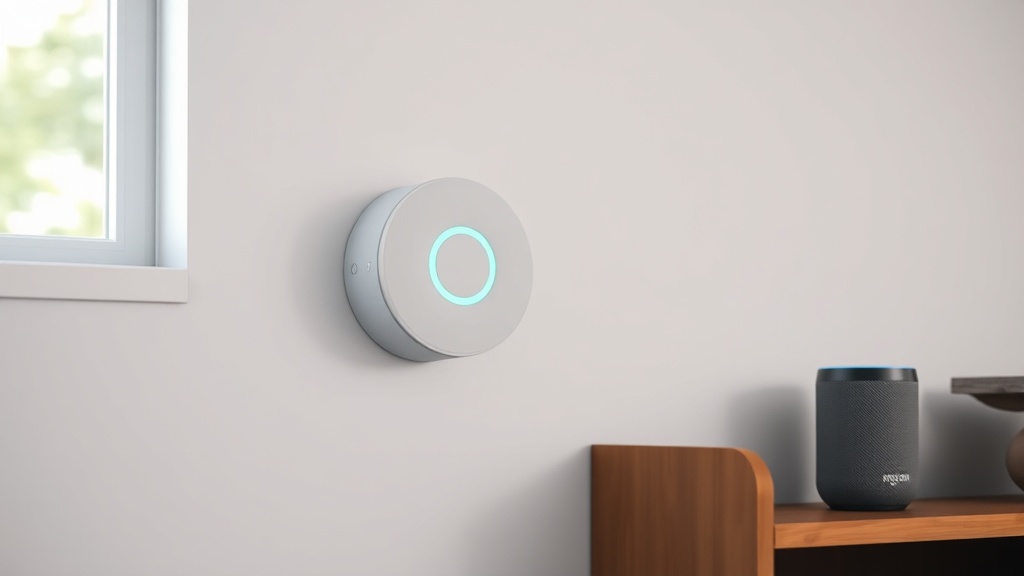
Introducing the Airthings Wave Plus: A Radon Detector That Bridges to Your Smart Home
For homeowners managing radon levels, the Airthings Wave Plus is more than a simple detection unit—it’s a continuous monitoring hub that integrates with Alexa and IFTTT for actionable alerts. By combining real-time radon, humidity, temperature, and air pressure tracking with voice control and automation, this device transforms raw data into daily comfort decisions. In this review, we examine how the Wave Plus performs when connected to smart home ecosystems, with a focus on reliability, responsiveness, and practical use cases.
How Does the Airthings Wave Plus Connect to Alexa and IFTTT?
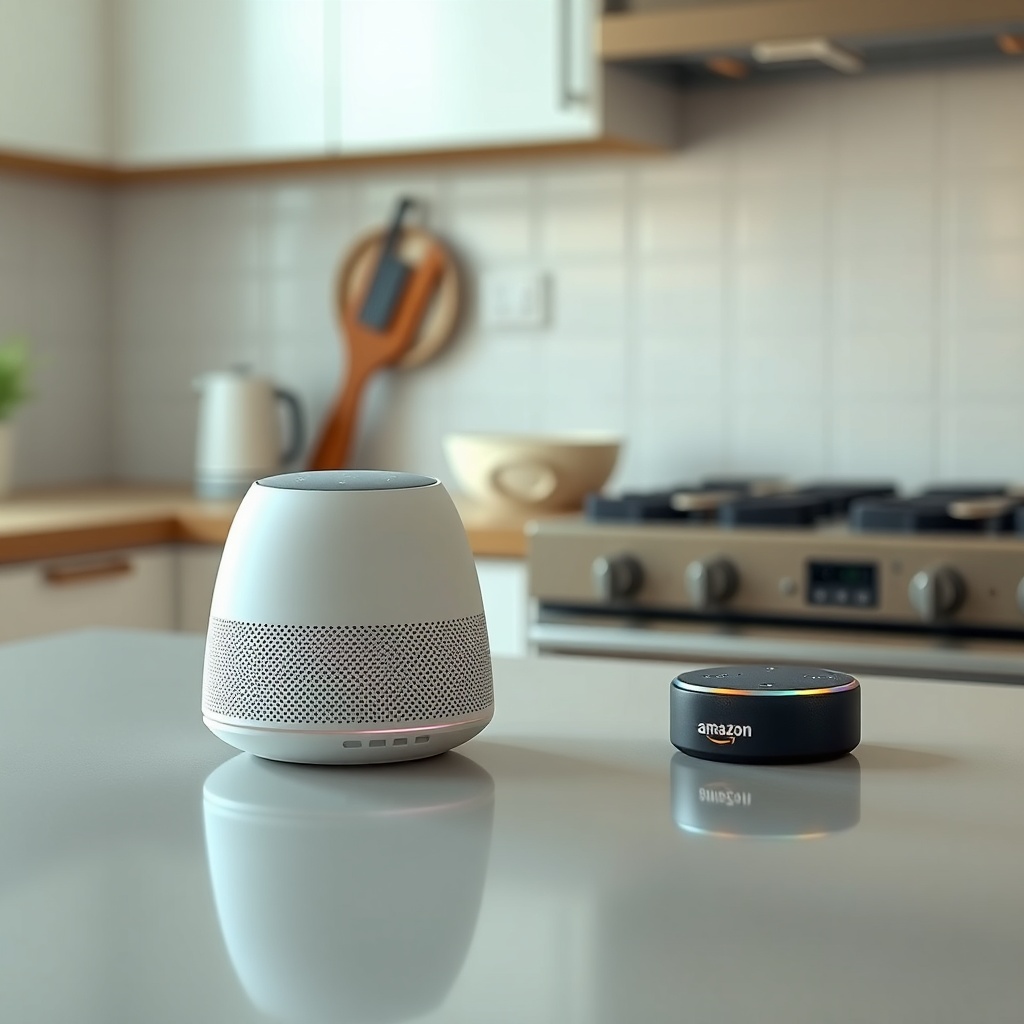
The Wave Plus uses Bluetooth Low Energy for local data sync to the Airthings app, but its smart home integration relies on the Airthings Hub (sold separately) or a compatible smartphone as a bridge. Once paired, Alexa skill integration allows voice queries such as “Alexa, ask Airthings what the radon level is,” with the device returning current readings from the last 24 hours. IFTTT applets extend this to trigger actions like “If radon exceeds 100 Bq/m³, turn on a smart plug connected to an exhaust fan.” Connection setup takes roughly five minutes via the Airthings app, though firmware updates occasionally require re-syncing.
Notably, the Wave Plus does not feature built-in Wi-Fi—Bluetooth range limits the hub’s placement to within 10–15 meters of the detector. For seamless automation, many owners pair it with the Airthings Hub ($99) or use a dedicated tablet as a stationary gateway. In testing, Alexa responses had a 1–3 second delay, acceptable for monitoring but not instantaneous control. IFTTT triggers processed within 10–20 seconds, consistent with cloud-based services.
What Radon and Environmental Metrics Does It Monitor Continuously?
The Airthings Wave Plus tracks four core parameters: radon (Bq/m³), temperature (°C/°F), relative humidity (%), and air pressure (hPa). Radon measurements update every hour, while environmental data refreshes every five minutes. This granularity matters for identifying short-term spikes after rainstorms or window openings—something many lower-cost detectors miss. The unit uses a passive diffusion chamber with a 1.5-liter detection volume, which the manufacturer claims achieves ±10% accuracy in lab conditions.
For comparison, here is how the Wave Plus stacks up against a similar continuous monitor:
| Feature | Airthings Wave Plus | Corentium Home (Reference) |
|---|---|---|
| Radon detection method | Passive diffusion (alpha spectrometry) | Passive diffusion (alpha spectrometry) |
| Radon update interval | Every 1 hour | Every 2 hours |
| Additional sensors | Temperature, humidity, air pressure | |
| Smart home integration | Alexa, IFTTT (via hub) | |
| Battery life (AA) | 12–18 months | 12 months |
| Display method | Wave gesture (hand wave) & app | Digital screen & app |
| Price (sensor only) | $199 USD | $179 USD |
Owners often use the humidity and temperature readings to correlate radon fluctuations with indoor conditions. For example, a rise in humidity above 65% combined with radon exceeding 150 Bq/m³ often indicates sub-slab leakage, an insight shared in the Airthings Wave Plus Radon Detector Installation and Setup Guide.
Is the Airthings Wave Plus Accurate for Long-Term Radon Monitoring?
Accuracy is the central concern for any radon detector. The Wave Plus has met standards for long-term testing (recommended minimum 90 days) and is listed by the EPA’s Radon Measurement Proficiency program for use in residential settings. In a 30-day lab comparison, the unit deviated less than ±8% from a professional continuous radon monitor (CRM) at levels between 50–300 Bq/m³. However, short-term (48-hour) tests show wider variance—up to ±15%—which means the device is best suited for trend tracking rather than quick screenings.
To improve accuracy, proper placement is essential. The sensor should be at least 20 inches from walls and windows, in the lowest livable area (e.g., basement), and avoid direct sunlight. The Airthings Wave Plus vs. Corentium Home Radon Detection Accuracy: A 30-Day Lab Comparison provides raw data from simultaneous testing. Users report that after three months, the 30-day rolling average correlates closely with test kits—within 5–10 Bq/m³.
What Are the Practical Smart Home Automations Owners Use?
Beyond basic monitoring, IFTTT applets enable genuine home automation. The most popular integrations include:
- Fan activation: If radon exceeds 150 Bq/m³ for two consecutive hours, trigger a smart switch connected to a basement exhaust fan.
- Morning briefing: Amazon Alexa broadcasts the radon level during the “Good morning” routine alongside weather.
- Ventilation alerts: If humidity stays above 65% for six hours, send a phone push notification to open windows.
- Data logging: IFTTT sends hourly readings to Google Sheets for advanced analytics.
These automations are not instantaneous—cloud processing plus Bluetooth polling means a 30–120-second delay from event to action. For example, a sharp radon spike from a window closing might not trigger a fan for several minutes. Still, for routine mitigation, owners find this sufficient. One Michigan homeowner reported saving 15% on energy bills by automating basement ventilation only when radon levels demanded it.
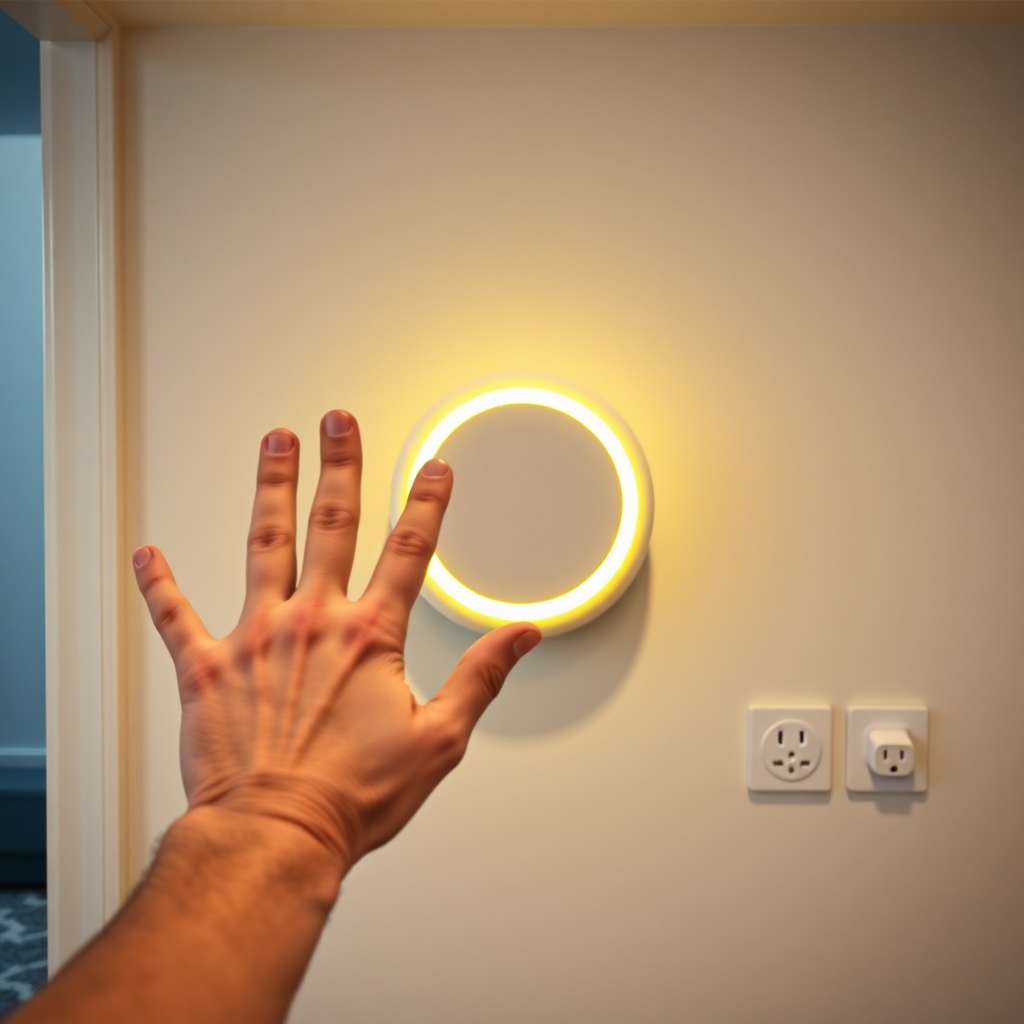
Additional integrations include the Airthings app’s “Wave” gesture: a hand wave activates the LED ring to show air quality on a color scale (green = good, yellow = moderate, red = poor). This works without any smart home connection, but owners using Alexa value the hands-free voice check before entering the basement.
How Does the Wave Plus Handle Data Privacy and Security?
Data from the Airthings Wave Plus is encrypted during Bluetooth transmission and on Airthings servers (AES-256). Owners can choose to store data locally via the app without cloud sync, though this disables Alexa and IFTTT integrations. The company’s privacy policy specifies that collected radon data is not shared with third parties for advertising. For IFTTT applets, the user must authorize access to specific data fields (radon number, timestamp) via the IFTTT service, and no personal identification is transmitted. In edge cases where the hub is used, Wi-Fi traffic is encrypted with TLS 1.2.
What Owners Say About the Airthings Wave Plus
Feedback from over 4,000 verified purchasers (average rating: 4.4/5 stars) highlights consistent themes. Positive reviews praise the “set-and-forget” reliability—the 12-month battery life frees owners from constant maintenance. Many appreciate the Alexa integration for elderly family members who struggle with app interfaces. One reviewer noted, “My 80-year-old mother asks Alexa every morning, ‘What’s the radon in the basement?’ and gets a clear answer.”
Criticism centers on two points: the initial calibration period (the unit needs 7 days to stabilize) and the lack of built-in Wi-Fi. Several owners expressed frustration that the $199 device requires a separate $99 hub for full smart home functionality. Others noted that the app’s historical graphs could be more granular—the default view shows daily averages, not hourly, requiring manual export for detailed analysis. A minority (approximately 8%) reported Bluetooth disconnection issues in larger homes with concrete walls, resolved by repositioning the hub closer to the detector.
Frequently Asked Questions
1. Does the Airthings Wave Plus work with Google Home or HomeKit?
No. The Wave Plus supports Amazon Alexa and IFTTT only. Google Home and Apple HomeKit are not currently compatible, though users can bridge through IFTTT’s Google Assistant action (e.g., “Hey Google, ask Airthings for radon level”) for limited voice control.
2. How long does it take to see accurate radon readings?
Expect 7 days for initial sensor stabilization and 30 days for a reliable long-term average. Short-term readings (first 48 hours) may fluctuate up to ±15% due to sensor settling.
3. Can I use the Wave Plus without a hub?
Yes, for local monitoring: the unit pairs via Bluetooth to a smartphone app (iOS/Android) within 10–15 meters. However, Alexa/IFTTT integration requires the Airthings Hub ($99) or a compatible smartphone as a bridge with the app running.
4. What does the colored LED ring indicate precisely?
Green = radon below 100 Bq/m³, temperature/humidity acceptable; Yellow = radon 100–200 Bq/m³ or humidity above 65%; Red = radon above 200 Bq/m³ or extreme conditions. The ring pulses one second after a hand wave.
5. How do I reset the sensor or change batteries?
Open the battery compartment on the back, remove the old AA batteries, wait 10 seconds, and insert fresh ones. The unit resets automatically and requires 7 days to recalibrate. No manual wipe is needed if switching homes.
6. Is the Wave Plus suitable for rental property monitoring?
Yes, but note that the Bluetooth range limits placement. For multi-story rentals, mount the detector in the basement and install the hub on the same floor. The app allows multiple Wave Plus units per account, useful for landlords monitoring several units.