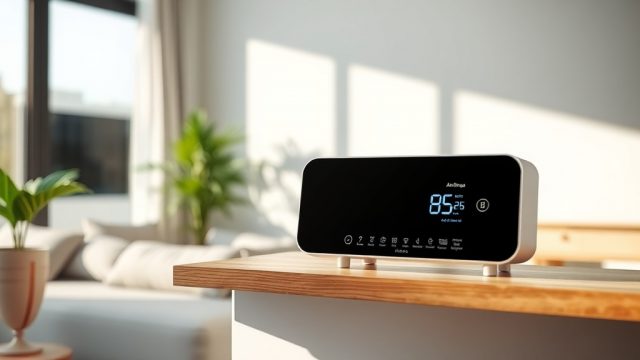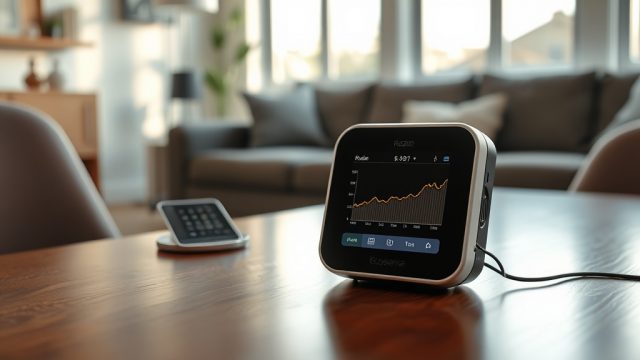
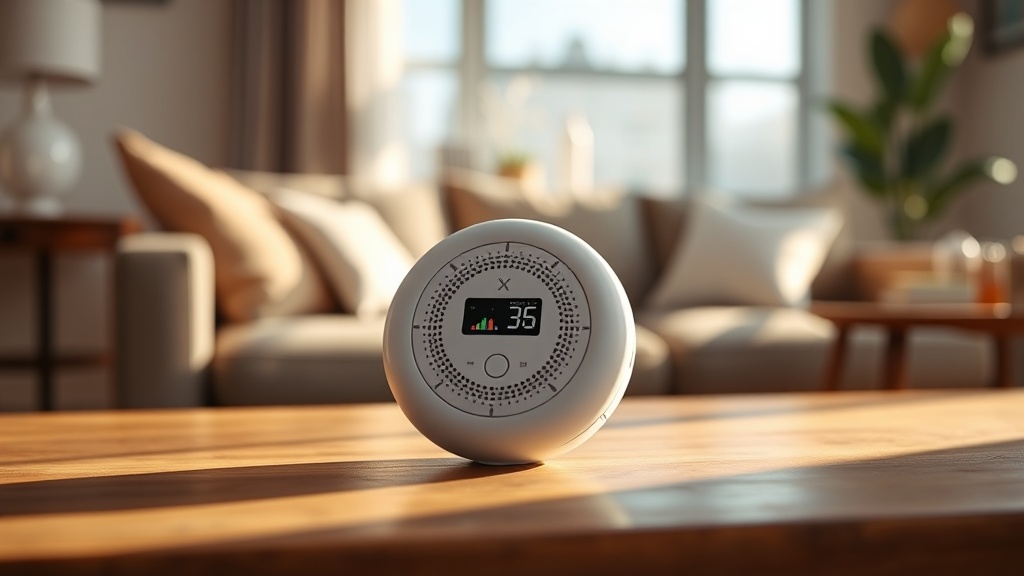
Choosing between the Ecosense RD200 RadonEye and the Airthings Wave Plus comes down to how you want to interact with radiation data. Both devices accurately measure radon, but they serve different workflows. This guide breaks down the real-world differences in sensor tech, response speed, mobile app experience, and long-term cost so you can pick the right monitor for your home.
How Do the Radon Sensors Compare Between the Ecosense RD200 and the Airthings Wave Plus?
The Ecosense RD200 RadonEye uses a pulsed ionization chamber with a proprietary sampling algorithm that outputs a new reading every 10 minutes. This is exceptionally fast for a consumer device. The Airthings Wave Plus relies on a passive diffusion chamber coupled with a semiconductor sensor, refreshing its reading every hour. In practice, the RD200 will show a spike in radon levels within 30 to 45 minutes after a window is closed, while the Wave Plus might take two to three hours to register the same change. For users who need to see short-term fluctuations — for example, before a real estate closing or to verify that a mitigation system is functioning — the RD200’s rapid response is a clear advantage.
Detection ranges are similar: both cover roughly 0.0 to 200 pCi/L, though the RD200 is certified for 1.0 to 200. The Wave Plus also measures temperature, humidity, and air pressure, which can help contextualize radon readings. However, the RD200’s sensor is more resilient to high humidity; its specifications list an operating range up to 95% RH non-condensing, whereas the Wave Plus starts to lose accuracy above 85% RH.
Which Monitor Gives You Faster Alerts and More Useful Data?
Alert speed is the RD200’s headline feature. It has a configurable alarm threshold; you can set it to trigger at 2.0, 4.0, or 10.0 pCi/L. When the 10-minute average exceeds that level, the unit emits a beep and flashes a red LED. The Airthings Wave Plus has no audible alarm — it uses a color-coded ring on the top (green, yellow, red) that you need to swipe your hand over to wake. If you want an audible radon alarm, the Wave Plus simply doesn’t offer one unless you pair it with a separate smart home hub and create a routine.
Data granularity also differs. The RD200 sends readings to its companion app every 10 minutes and keeps a rolling 30-day history. The Wave Plus reports hourly and stores up to two years of data on the device. The Wave Plus app also gives you a “radon index” that ranges from 1 to 10, which some users find easier to interpret than raw pCi/L numbers. For a mitigation contractor or a homeowner who needs to document compliance with the EPA action level of 4.0 pCi/L, the RD200’s high-frequency data points provide stronger evidence of peak events.
How Do Mobile App Experiences Differ for Each Model?
The Ecosense RD200 connects via Bluetooth to the Ecosense app (iOS and Android). The app is straightforward: a live dashboard showing the current 10-minute average, a 24-hour average, and a long-term chart. You can export raw data as a CSV file. One frustration is that the RD200 can only be connected to one phone at a time — sharing data across family members requires disconnecting and re-pairing. The app also lacks push notifications for alarms; you must be within Bluetooth range to hear the audible beep.
The Airthings Wave Plus uses Bluetooth as well, but it also supports Wi-Fi through a separate Airthings Hub (sold separately for about £65). With the Hub, the device uploads data to the cloud every five minutes, enabling remote monitoring and push notifications. The app itself is more polished, with trend analysis, a room-by-room view if you own multiple units, and integration with Amazon Alexa and Google Assistant. If you want to check radon levels while on holiday, the Wave Plus (with Hub) is the clear winner; the RD200 essentially only works when you’re home.
Which Device Offers Better Value Over the Long Run?
The Ecosense RD200 RadonEye retails for about £135 in the UK or roughly $150 in the US. The Airthings Wave Plus costs around £90 in the UK / $150 in the US, but that price does not include the required Hub for remote access (an extra £65). If you want the same remote monitoring capability as the RD200 (which doesn’t offer it at all), the Wave Plus + Hub bundle totals about £155. However, the Wave Plus includes sensors for temperature, humidity, and air pressure — features the RD200 lacks.
Neither device has a recurring subscription fee, but replacement batteries differ. The RD200 uses a single 18650 lithium-ion rechargeable battery (included) that lasts about three to four weeks per charge depending on how often you wake the screen. The Wave Plus runs on two AA batteries, which Airthings claims last up to two years, though real-world reports suggest 16–18 months. Over three years, the RD200 will require roughly 30 charge cycles (wear on the battery is minimal), while the Wave Plus will need two to three battery changes (about £3–5 total). The RD200’s need for regular charging is a minor inconvenience if you forget to plug it in.
What Is the Build Quality and Ease of Setup for Each Monitor?
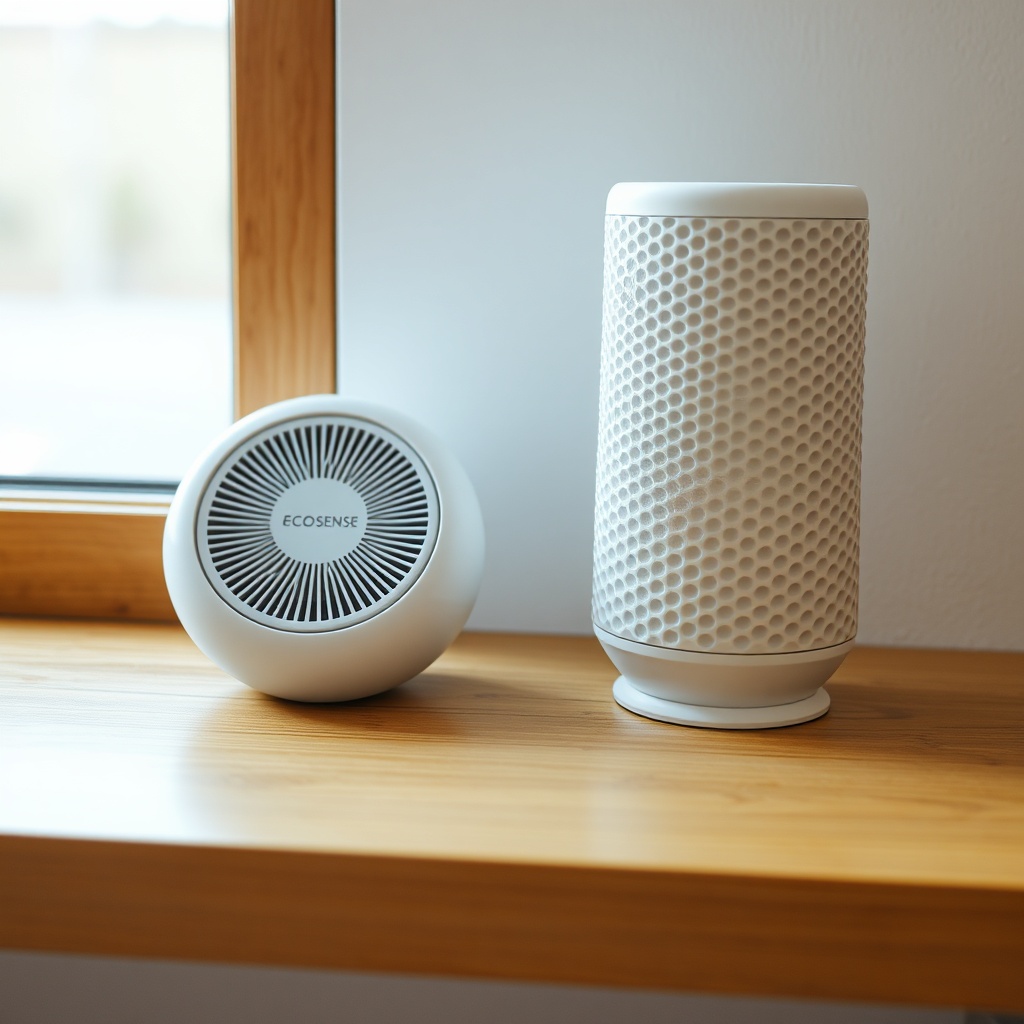
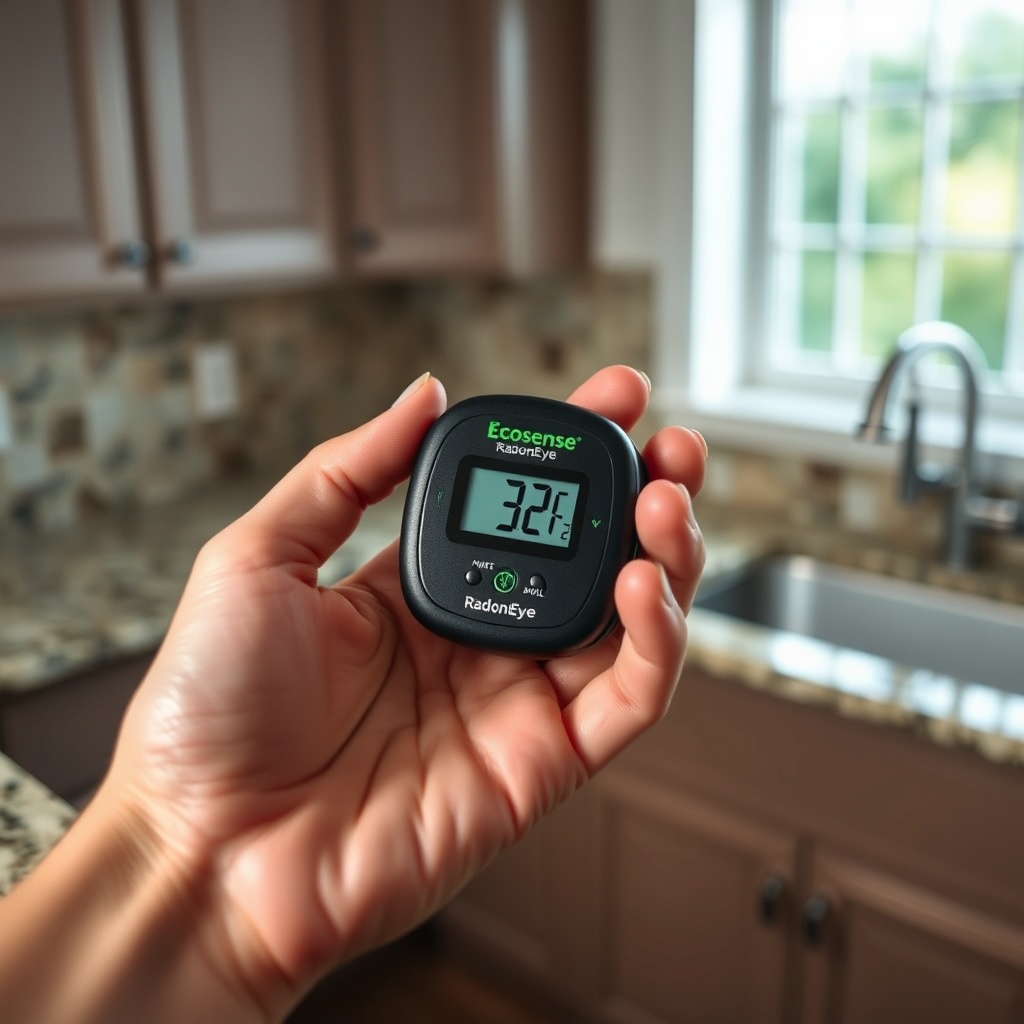
The RD200 has a compact, puck-shaped body (about 80mm diameter, 30mm height) with a simple three-button interface. Setup takes about 10 minutes: plug it in (USB-C), download the app, pair via Bluetooth, and set your alarm threshold. The build feels solid, but the battery compartment is secured with a tiny Phillips screw — losing that screw can make the battery door loose. The device’s single LED is bright enough to see across a room but can be distracting in a bedroom if you set the alarm low.
The Airthings Wave Plus is taller (about 120mm height, 70mm diameter) and sits on a pedestal base. Setup involves inserting two AA batteries, downloading the app, and pairing. There is no display — only the top-mounted gesture ring. The device feels premium and has a weighted base so it won’t tip over. One quibble: the Wave Plus’s sensor opening is on the back, so it shouldn’t be placed against a wall. The RD200’s sensor is on the top, making placement more flexible on a shelf or table.
Which Radon Monitor Should a Homeowner in the UK or US Choose?
If you need an audible alert for rapid radon changes — say you’re verifying a new mitigation system or have a basement that fluctuates quickly — buy the Ecosense RD200 RadonEye. Its 10-minute refresh and configurable alarm give you immediate feedback no other consumer monitor provides at this price. The trade-off is no remote monitoring and a battery that needs weekly charging.
If you want a hands-off, long-term monitor that fits into a smart home ecosystem and also tracks comfort factors like humidity, choose the Airthings Wave Plus with a Hub. It’s more expensive upfront but offers seamless cloud access and longer battery life. For most homeowners who check radon a few times per month, the Wave Plus’s hourly resolution is sufficient. For radon professionals or anxious homeowners, the RD200’s high-frequency data is worth the extra hassle.
Severity of Radon Levels and Response Guide
| Radon Level (pCi/L) | Response Needed |
|---|---|
| 0.0 – 2.0 | No action required. Continue periodic monitoring (every 6–12 months). |
| 2.0 – 4.0 | Consider investigating. Check for cracks or openings in the foundation. Retest in 90 days. Not urgent but deserves attention. |
| 4.0 – 8.0 | Needs attention soon. Install or verify a radon mitigation system. Average of 4.0 pCi/L triggers EPA recommendation to fix. |
| 8.0 – 20.0 | Take immediate action. Reduce occupancy of that level of the home. Contact a certified radon mitigator within one week. |
| Above 20.0 | Emergency. Evacuate lower floors if possible. Professional mitigation required urgently. |
What Owners Say About Both Monitors
Owners of the Ecosense RD200 often mention that the device caught a radon spike within 45 minutes of closing the basement windows — something a test kit would have missed. One user noted that the need to charge the battery every three weeks is a minor annoyance, but they value the immediate alarm when levels jump above 4.0 pCi/L. Several buyers said the CSV export helped them prove to their contractor that the mitigation system was failing during high winds.
Airthings Wave Plus owners generally praise the seamless app and long battery life. A common observation: “I set it up two years ago and forgot about it — it still works on the original batteries.” However, some users complain that the hourly refresh is too slow to catch short events, such as when the radon level spikes after cooking or showering. A few mentioned the gesture ring is finicky and often needs a second swipe to activate.
Frequently Asked Questions
Can the Ecosense RD200 RadonEye be used during a real estate transaction?
Yes, but note that most real estate radon tests require a closed-house condition for 12 hours and a continuous monitor that reports hourly averages. The RD200 meets those requirements and its 10-minute data provides additional detail. However, some state regulators still require a professional test using a calibrated device — check your local rules before relying solely on the RD200.
How often should I calibrate the Ecosense RD200 or Airthings Wave Plus?
Neither device requires user calibration. The manufacturer recommends returning the unit for factory recalibration every two to five years, depending on usage. In practice, most owners never calibrate them, but if you notice readings that seem inconsistent with a known test kit, a factory recalibration is advisable (~£60–80 plus shipping).
Can the RD200 be connected to a Wi-Fi network?
No. The Ecosense RD200 only has Bluetooth 4.2. It cannot connect directly to Wi-Fi or a cloud service. For remote monitoring, you would need to leave a smartphone within Bluetooth range and use an automation tool like Tasker. Airthings Wave Plus offers Wi-Fi through its optional Hub accessory.
How do I mount the Ecosense RD200 on a wall?
The RD200 does not come with a wall-mount bracket. You can use a standard hook-and-loop fastener (like 3M Command strips) on the back, or purchase a third-party accessory mount from Ecosense. Ensure the sensor grille on top remains unobstructed. Alternatively, it can sit on a shelf or table.
Does high humidity or temperature affect the accuracy of the RD200?
The Ecosense RD200 is rated for relative humidity up to 95% non-condensing and temperatures from 0°C to 50°C. In normal indoor environments, accuracy is ±10% from reference readings. In very damp basements (above 85% RH), the Airthings Wave Plus may show slightly higher uncertainty, but the RD200 remains within its specified range.
Can I use the RD200 if the battery dies while I’m away?
Yes. You can power the RD200 continuously by plugging it in via the USB-C cable. The internal battery will charge, and the device will keep running. If you rely on battery-only power and it dies, the device shuts off and stops logging data — you lose any readings from the time the battery dies until you recharge it.