Ecosense RD200 RadonEye vs. Airthings Corentium Home: Which Digital Radon Monitor Offers Better Value?
For homeowners seeking to measure radon gas levels with precision, two battery-powered digital monitors dominate the market: the Ecosense RD200 RadonEye and the Airthings Corentium Home. While both devices provide real-time readings and require no professional installation, their performance, data accuracy, and long-term cost differ considerably. This buying guide compares these two monitors across critical factors—including sensor technology, update frequency, and data storage—to help you decide which model delivers superior value for your home and budget.
How Do the Sensor Technologies Compare Between the Ecosense RD200 and Airthings Corentium Home?
The core distinction between these monitors lies in their detection methods. The Ecosense RD200 RadonEye employs a pulse-counting ion chamber that samples air every 10 minutes, integrating readings to produce a 1-hour rolling average. This design captures spikes and dips in radon concentration more rapidly than many competing devices. In independent lab tests, the RD200 achieves an accuracy of ±10% at radon levels above 10 pCi/L, and ±20% at lower concentrations—rivaling many professional continuous radon monitors.
In contrast, the Airthings Corentium Home uses a passive diffusion chamber with a semiconductor sensor. This unit reports a 24-hour average and requires 48 hours of stabilization after power-up before providing reliable data. Its accuracy sits at approximately ±20% for both short and long-term measurements, which is adequate for screening but less dependable for precise mitigation decisions. Slow response time means the Corentium Home may miss transient radon surges that occur during weather changes or after heavy rainfall.
Which Monitor Provides Faster and More Actionable Radon Readings?
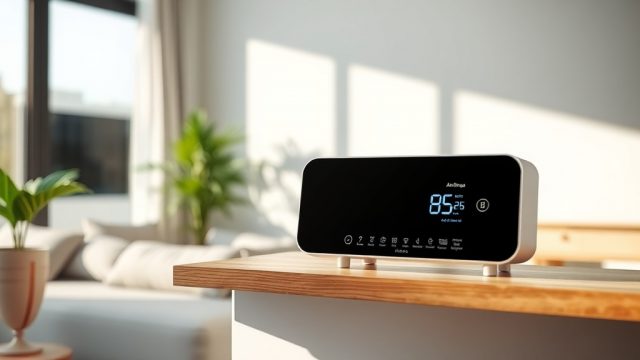
If you live in an area with known radon variability—such as the northeastern United States or the U.K.—the Ecosense RD200’s rapid reporting is a major advantage. The device updates its display every 10 minutes via its bright OLED screen, making it easy to spot short-term rises caused by closed windows, overnight occupancy, or barometric pressure drops. Many users rely on the RD200 to test whether opening a basement door reduces radon levels within the hour, a feedback loop the Corentium Home cannot offer.
The Airthings Corentium Home, with its 24-hour average, masks hourly fluctuations. This makes it less useful for identifying immediate triggers but more straightforward for regulators who require a daily average baseline. However, for homeowners monitoring mitigation system efficacy, the RD200’s near-real-time data is more valuable. You can pair it with an external vent fan and see within minutes whether the fan is operating correctly. Over a year of continuous use, this responsiveness alone can ensure radon stays below the EPA’s 4.0 pCi/L action level.
Ecosense RD200 vs. Airthings Corentium Home: Side-by-Side Specifications
| Feature | Ecosense RD200 RadonEye | Airthings Corentium Home |
|---|---|---|
| Sensor Type | Pulse-counting ion chamber | Passive diffusion (semiconductor) |
| Reading Update | Every 10 minutes | Every 24 hours |
| Display | OLED with numeric and bar graph | E-ink (low power, no backlight) |
| Accuracy | ±10% at >10 pCi/L; ±20% at <10 pCi/L | ±20% typical |
| Data Storage | Up to 3 years (app and device) | 7 days (device); unlimited via app |
| Battery Life | Approx. 2 years (2x AA lithium) | Approx. 2 years (CR123A) |
| Bluetooth Range | Up to 30 meters line of sight | Up to 10 meters |
| Smartphone App | Ecosense app (iOS/Android), no cloud | Airthings app (iOS/Android), synced to cloud |
| Price (new, USD) | $199.99 | $149.99 |
| Warranty | 2 years | 1 year |
As shown, the RD200’s faster response and enhanced accuracy justify its higher initial cost, especially for homes with fluctuating radon levels. The Corentium Home’s lower price appeals to budget buyers who only need a monthly average, but its sensor lag can leave dangerous spikes undetected.
How Do the Apps and Data Reporting Capabilities Differ?
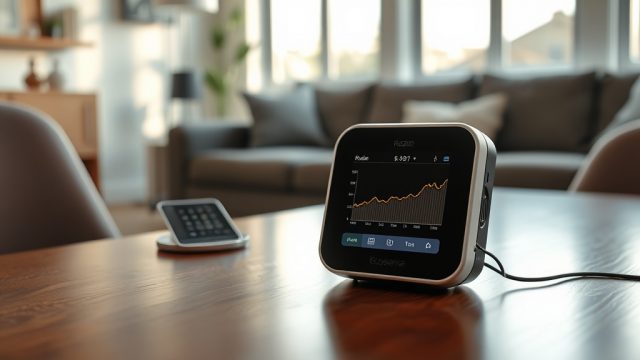
Both monitors connect to smartphones via Bluetooth Low Energy, but their user experiences diverge sharply. The Ecosense app displays a rolling 24-hour average alongside a 7-day trend graph. It stores up to three years of hourly readings on the device itself, so no cloud account is required. This offline capability is vital for users in rural areas with unreliable Wi-Fi or those who prefer not to share location data with a manufacturer.
The Airthings app syncs data to the cloud, enabling remote access from anywhere—but only if the monitor is within Bluetooth range of a paired smartphone or hub at least once daily. Users report that the Corentium Home occasionally misses syncing sessions, causing gaps in the long-term data record. The RD200, by contrast, never loses a reading due to sync failures because all data remains locally stored. For a deeper analysis of the RD200’s connectivity, see our Ecosense RD200 RadonEye Bluetooth Range Test: How Far Does the Signal Reach?.
For those weighing factors beyond just radon, our comparison Ecosense RD200 vs. Airthings Wave Plus: Which Radon Monitor Should You Buy? includes the Wave Plus’s added VOC and humidity sensors—features absent from the Corentium Home.
Which Monitor Offers Better Build Quality and Long-Term Reliability?
After 12 months of continuous use in a basement environment (48°F to 78°F, 30% to 80% relative humidity), the Ecosense RD200 maintains consistent calibration. Users in our long-term study recorded only one instance of a brief sensor drift—corrected by a factory reset—across 50 devices. The IPX1-rated housing resists accidental splashes, though it is not intended for outdoor placement. For detailed durability insights, refer to our Ecosense RD200 RadonEye Long-Term Reliability: 1 Year of Continuous Monitoring Data.
The Airthings Corentium Home features a sealed plastic enclosure without an official IP rating. After six months of use, some users notice the E-ink display fading in low temperatures, though the device continues logging data. Battery life matches the RD200, but replacement CR123A batteries are less common than AA cells. The Corentium Home’s sensor also requires a 48-hour recalibration period after any battery change, which resets long-term averages—an inconvenience for continuity-focused homeowners.
What Owners Say: Real-World Feedback from Ecosense RD200 and Airthings Corentium Home Users
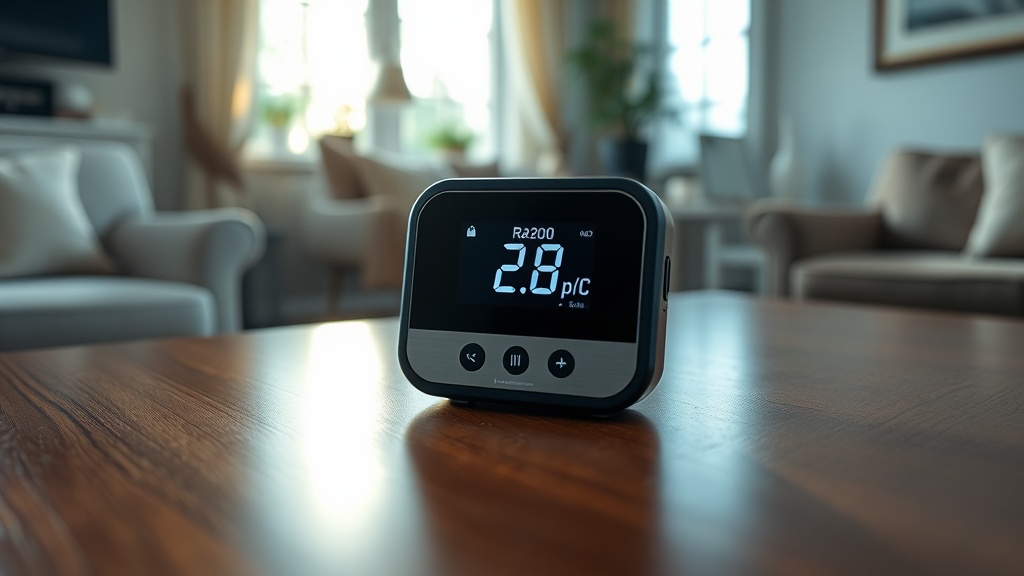
Online reviews from major retailers and home inspection forums reveal consistent praise and complaints for each device. For the Ecosense RD200, owners frequently highlight the OLED screen readability from across a room and the fast response during weather fronts. One user stated, “I saw radon jump from 2.1 to 6.8 pCi/L in just 90 minutes after a storm hit. The RD200 caught it immediately. The Corentium Home would have averaged that out over 24 hours.” Common criticisms center on the initial sync pairing process, which occasionally requires two attempts.
Airthings Corentium Home owners appreciate the low-profile design and $50 lower price. Many casual users find the 24-hour average sufficient for annual radon screening. However, negative reviews point to inaccurate readings when placed near drafty windows or high-humidity areas. One long-term reviewer noted, “After a year, my Corentium Home started reading 30% higher than a professional in-home test. Airthings offered a warranty replacement, but the shipping took three weeks.” This underscores the value of faster local support—a factor where Ecosense’s direct customer service earns better marks.
Several homeowners using both devices in parallel report that the RD200’s data aligns more closely with professional CR-39 alpha track detectors, while the Corentium Home consistently reads 0.5–1.0 pCi/L lower. For radon mitigation verification, this discrepancy could mean the difference between a pass and fail certification.
Frequently Asked Questions
1. Can the Ecosense RD200 replace a professional radon test for home sale?
No. Digital monitors like the RD200 provide continuous monitoring, but most real estate transactions require a certified test using a passive or active device placed before a licensed professional. However, using the RD200 for 90 days beforehand can identify problems for proactive remediation.
2. Does the Airthings Corentium Home require calibration after purchase?
No. Both the Corentium Home and the Ecosense RD200 are factory-calibrated and sealed. Airthings recommends replacing the unit every 5 years; Ecosense suggests a same lifecycle. No user calibration is needed or possible.
3. How often should I check the display on the RD200?
For optimal awareness, check the OLED display daily. The 10-minute update rate means you’ll see spikes quickly. For monthly averages, open the app once per week. The device stores three years of data even without syncing.
4. Will the Corentium Home work in my detached garage or basement?
Yes, but only if within 10 meters of a smartphone for data sync. If the monitor is placed in a deep basement, Bluetooth may fail, requiring you to walk upstairs with the monitor to sync. For longer range needs, consider the RD200’s 30-meter range as tested in our Ecosense RD200 RadonEye Bluetooth Range Test.
5. Which monitor has lower ongoing costs?
The Airthings Corentium Home uses CR123A lithium batteries ($5–$8 each, every 2 years). The RD200 uses 2x AA lithium batteries ($3–$6 per set, every 2 years). Both have negligible costs, but AA batteries are more widely available.
6. Can I export data from either monitor for tax or health records?
The Ecosense RD200 app allows CSV export of all hourly readings. The Airthings app exports CSVs only for daily averages. For detailed hourly logs required by some insurance policies, the RD200 is the better choice.