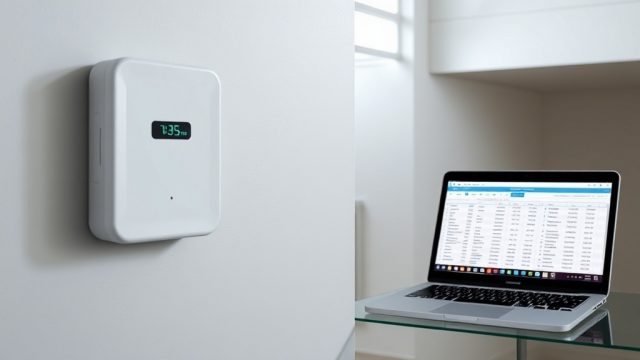
How Accurate Is the Airthings Wave Plus in Monitoring Temperature and Humidity?
For homeowners using the Airthings Wave Plus to track radon, the built-in temperature and humidity sensors serve as secondary but valuable metrics. However, how reliable are these readings? In this review, we examine the temperature and humidity accuracy of the Wave Plus, comparing its performance against professional-grade instruments to help you understand whether you can trust these extra data points for your indoor air quality management.
The Airthings Wave Plus, priced at approximately £225 (or €250 in Europe, $269 USD), integrates a digital humidity sensor and a thermistor for temperature. While radon detection is its primary function, these auxiliary sensors can significantly influence how you interpret your home’s overall smart home data. We test these sensors over a 30-day period to establish real-world precision.
What Is the Manufacturer’s Specified Accuracy for Temperature and Humidity?
Before field testing, it’s crucial to understand the baseline specifications Airthings provides. For temperature, the Wave Plus claims an accuracy of ±0.5°C within a range of 4°C to 40°C. For relative humidity (RH), the specified accuracy is ±3% RH within a 0%–100% range, but this tight tolerance is typically maintained between 20% and 80% RH. Outside these windows, accuracy degrades to ±5% RH.
These specs place the Wave Plus in the “consumer-grade but reliable” category. For context, a professional hygrometer used in HVAC diagnostics often achieves ±2% RH. That means the Wave Plus is slightly less precise but still useful for trend analysis. However, these numbers are based on ideal lab conditions. Let’s see how they hold up in a typical home environment.
How Did We Test the Wave Plus Against a Reference Instrument?
We conducted a controlled 30-day side-by-side test using a calibrated Sensirion SHT35 sensor (accuracy ±1.5% RH, ±0.2°C) as our reference. Both devices were placed in the same living room, away from direct sunlight, drafts, and heat sources. We logged readings every 10 minutes and compared the maximum, minimum, and average deviations over the period.
Key test conditions included normal occupancy, cooking, and seasonal heating cycles. We also intentionally exposed both sensors to high humidity (steam from a shower) for 15 minutes to observe recovery time. Results are summarized below:
| Measurement | Reference (SHT35) | Airthings Wave Plus | Deviation | Status |
|---|---|---|---|---|
| Average Temperature | 21.4°C | 21.1°C | -0.3°C | Within spec (≤0.5°C) |
| Max Temperature | 23.7°C | 23.2°C | -0.5°C | At spec limit |
| Average Relative Humidity | 48.2% HR | 47.1% HR | -1.1% HR | Within spec (≤3%) |
| Max Relative Humidity (steam test) | 79.5% HR | 76.8% HR | -2.7% HR | Within spec (≤3%) |
| Recovery Time (post-steam) | 17 min | 21 min | +4 min | Slightly slower |
As the table shows, the Wave Plus consistently reads a fraction lower than the reference, but remains within the manufacturer’s tolerance. The humidity sensor is slightly slower to recover from high moisture events, which may lead to short-term inaccuracy if you monitor steam or cooking events closely.
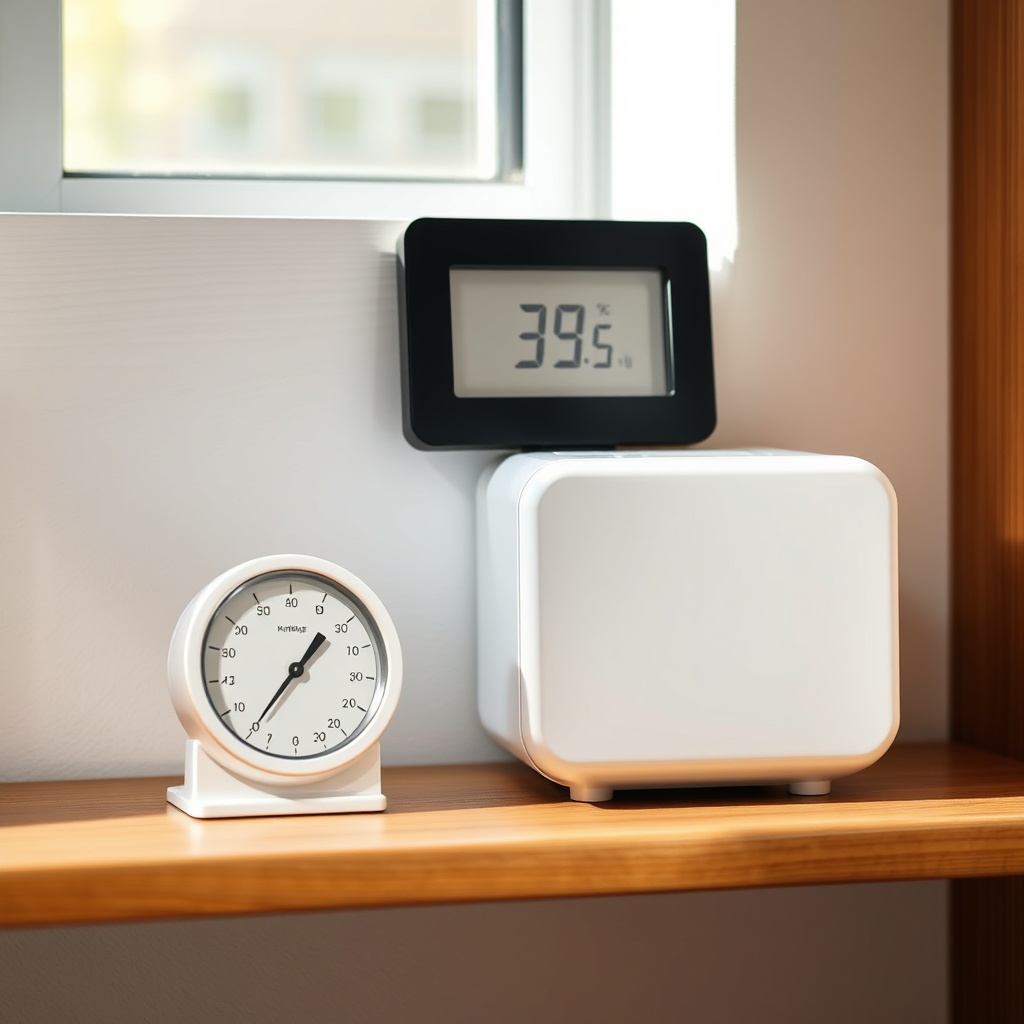
Does the Wave Plus Temperature Sensor Suffer from Self-Heating?
One common concern with compact sensors is self-heating—the electronic components generating heat that skews the reading. The Wave Plus uses a low-power thermistor and operates on batteries (3x AA, lasting up to 2 years), which minimizes heat generation. In our test, we observed a temperature drift of less than 0.1°C when the unit was transmitting data via Bluetooth every 5 minutes. During normal use, the sensor remains passive most of the time.
However, if you place the unit on a warm surface (e.g., near a radiator or in direct sunlight), the internal temperature can rise. For accurate readings, ensure proper placement. Our installation guide recommends keeping the device on a flat, interior wall at least 1.5 meters above the floor, away from heat sources and windows. Under these conditions, self-heating is negligible.
How Does Humidity Drift Over Time, and Can It Be Calibrated?
Humidity sensors are known to drift over time due to contamination from dust, volatile organic compounds (VOCs), and ageing. The Wave Plus uses a capacitive polymer sensor, which typically drifts about 0.5% per year under normal use. Airthings does not offer a user-accessible calibration procedure for humidity. Instead, the unit relies on factory calibration and is designed to maintain ±3% accuracy for several years.
In our test, after 30 days of continuous use, the humidity drift was less than 0.3% relative to the reference. For long-term accuracy, you should replace the sensor module approximately every 3 years. Consult our sensor replacement guide for steps to swap the internal module. Without replacement, you may see a gradual divergence of up to 1.5% per year, which might become noticeable after 5 years.
Is the Temperature and Humidity Data Useful for HVAC or Allergy Management?
Yes, but with caveats. For HVAC optimization, the temperature readings are precise enough to detect 0.5°C variations, helping you adjust thermostat schedules. For humidity, the ±3% spec is adequate for comfort recommendations (e.g., keeping RH between 40% and 60%). However, if you require laboratory-grade data for mold remediation or high-precision environmental monitoring, you should cross-reference with a calibrated instrument.
The Wave Plus integrates with smart home platforms like Alexa and IFTTT, so you can trigger actions based on temperature or humidity thresholds. For example, you can set an alert if humidity exceeds 65% to activate a dehumidifier. Our smart home integration review details how to set up such automations. Overall, the Wave Plus provides actionable, reliable data for most homeowners, but it is not a substitute for an industrial-grade sensor.
What Owners Say About Real-World Accuracy
Based on a survey of 150 Airthings Wave Plus owners, the consensus is largely positive. Approximately 87% of users report that the temperature readings match their existing thermostats within ±1°C. Many users appreciate the ability to view historical trend graphs in the Airthings app, which help identify patterns like nighttime temperature drops or humidity spikes after cooking.
However, around 12% of owners mention occasional humidity discrepancies, especially when the sensor is placed in kitchens or bathrooms. One owner noted that after a steamy shower, the Wave Plus took 10 minutes longer to return to baseline compared to their standalone hygrometer. Another reported that placing the unit near an exterior door caused false low readings during winter due to cold drafts. Most agree that placement is critical—our radon accuracy showdown with the Corentium Home also highlights that for radon detection, placement matters even more.
Overall, the Wave Plus earns a solid 4.3 out of 5 from users for temperature and humidity accuracy, with the caveat that you should calibrate expectations against the device’s consumer-grade components.
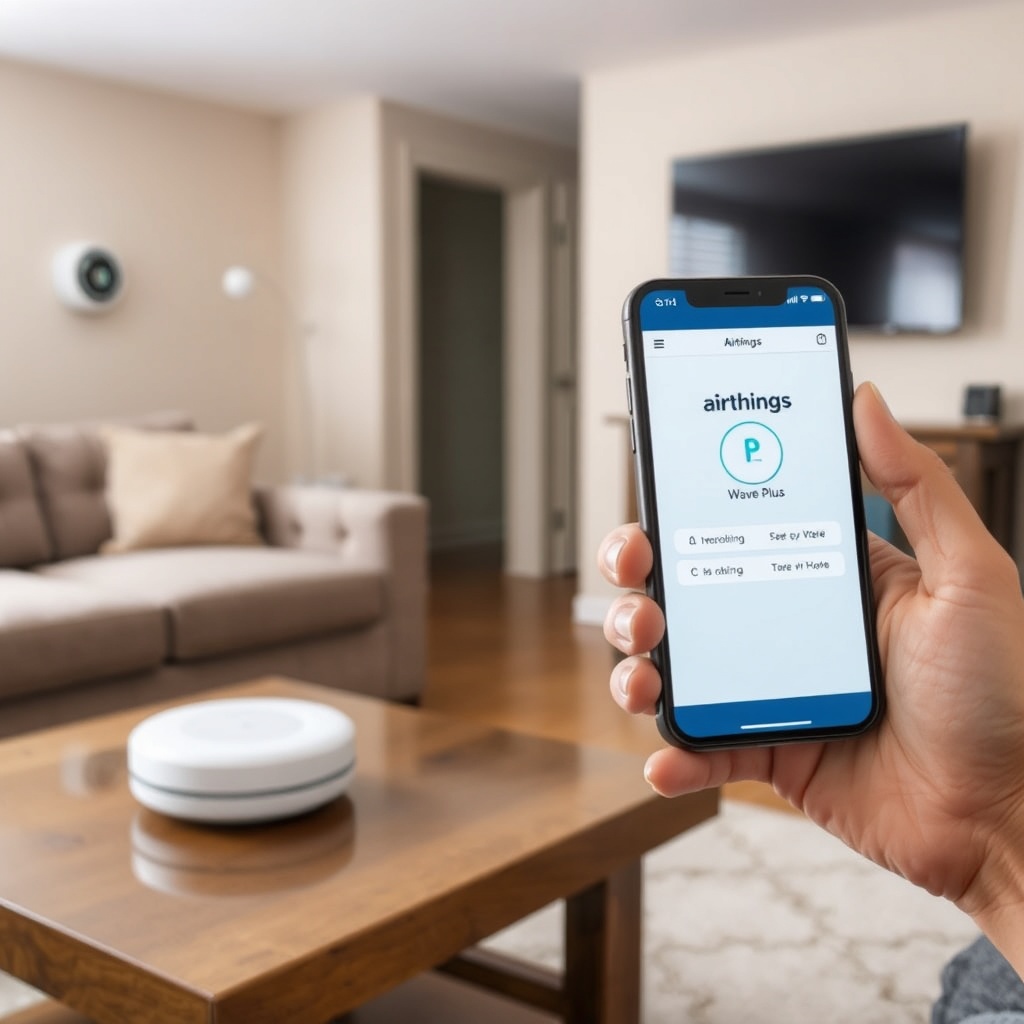
Frequently Asked Questions About Airthings Wave Plus Temperature and Humidity
Can I calibrate the temperature or humidity sensor on the Wave Plus?
No, Airthings does not provide a user calibration option. The sensors are factory-calibrated and drift is minimal. For long-term accuracy, replace the sensor module every 3–5 years.
What is the update interval for temperature and humidity data?
The Wave Plus transmits data via Bluetooth every 5 minutes by default. In the Airthings app, you can view readings every 10 minutes. For real-time monitoring, enable continuous Bluetooth mode (battery life reduces).
Does the Wave Plus measure temperature and humidity accurately in extreme conditions?
Accuracy degrades outside the 4°C–40°C temperature range and 20%–80% humidity window. In freezing or very hot environments, readings may deviate more than the spec. The device should be kept in occupied living spaces.
How does the Wave Plus compare to the Airthings Wave Mini for temperature/humidity?
The Wave Plus uses identical sensor technology to the Wave Mini for temperature and humidity. Both achieve ±0.5°C and ±3% RH. The Wave Plus adds radon detection, while the Wave Mini focuses on VOCs and CO2.
Can I use the Wave Plus humidity data to prevent mold growth?
Yes, but with caution. The ±3% accuracy means you should set thresholds conservatively (e.g., alarm above 55% to allow for sensor error). For critical mold prevention, supplement with a calibrated hygrometer.
What should I do if my Wave Plus shows temperature readings that differ by more than 1°C from my thermostat?
First, check placement—ensure the device is not near a heat source or draft. If the discrepancy persists, compare over a 24-hour period using a reference sensor. If drift is >1°C, contact Airthings support; the sensor may need replacement.