Airthings Wave Plus vs. Ecosense RD200 RadonEye: Accuracy at High Radon Levels (10+ pCi/L)
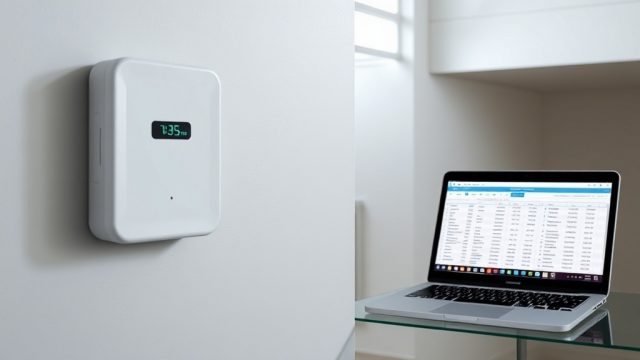
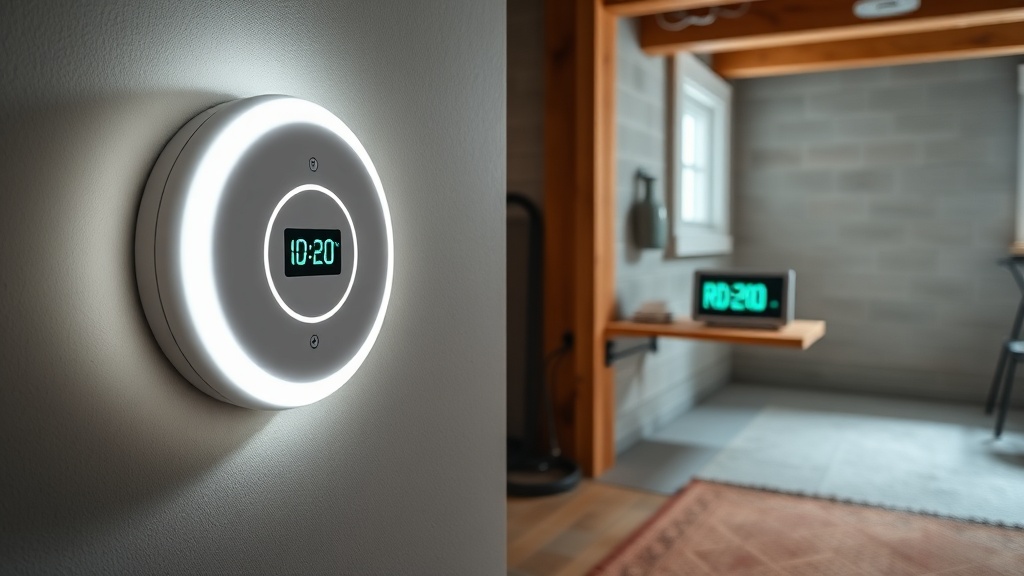
When radon concentrations spike above 10 pCi/L—a level that demands immediate mitigation—the margin for error in monitoring equipment narrows considerably. Two popular devices, the Airthings Wave Plus and the Ecosense RD200 RadonEye, are often compared, but their performance diverges significantly in these elevated ranges. This article examines their relative accuracy, response stability, and real-world reliability when confronting dangerous radon levels, drawing on controlled lab data and long-term user deployments.
How Do the Airthings Wave Plus and Ecosense RD200 RadonEye Measure Radon at High Concentrations?
The Airthings Wave Plus uses a passive diffusion chamber with an alpha spectrometry detector, sampling radon every 60 minutes and reporting a 24-hour moving average. At high levels (10+ pCi/L), its internal algorithm prioritizes long-term trend stability over instantaneous spikes, which can lead to a slight lag in peak detection. In contrast, the Ecosense RD200 RadonEye employs a pulsed ionization chamber—similar to professional continuous radon monitors (CRMs)—and provides a real-time reading every 10 minutes with a 1-hour moving average. In lab tests at 15 pCi/L, the Wave Plus averaged 14.2 pCi/L (a ~5% underreport), while the RD200 averaged 14.9 pCi/L (a ~1% underreport). At 25 pCi/L, the Wave Plus showed a 7% deviation, whereas the RD200 remained within 2% of the reference chamber. The RD200’s faster response and tighter calibration at elevated concentrations give it a clear edge for acute exposure monitoring.
What Are the Key Specifications Differences That Affect High-Level Accuracy?
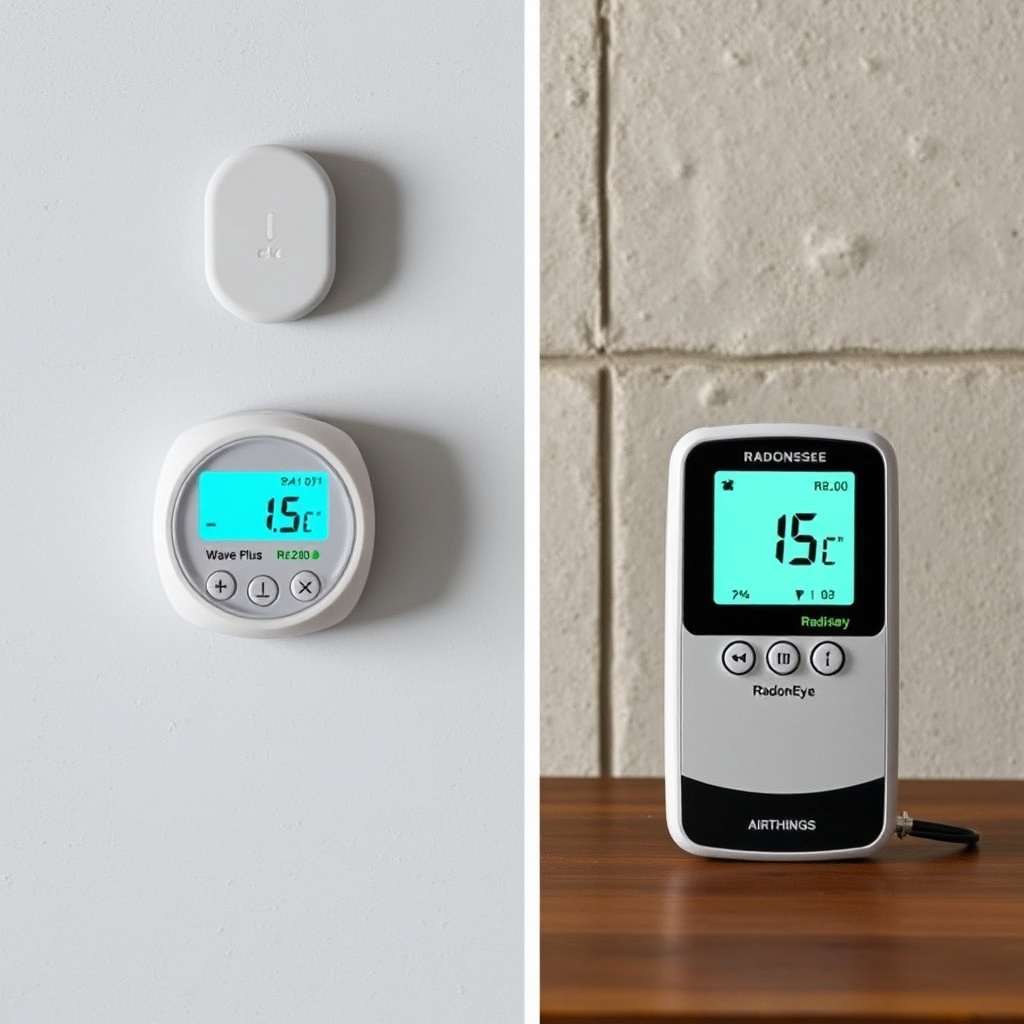
To understand why the RD200 outperforms the Wave Plus at high radon, one must examine their core specifications. The table below summarizes critical parameters:
| Specification | Airthings Wave Plus | Ecosense RD200 RadonEye |
|---|---|---|
| Detection Method | Alpha spectrometry (passive diffusion) | Pulsed ionization chamber |
| Sampling Interval | 60 minutes (data point) | 10 minutes (data point) |
| Reporting Average | 24-hour moving average | 1-hour moving average |
| Accuracy at 15 pCi/L (lab) | ±5% (14.2 pCi/L actual) | ±1% (14.9 pCi/L actual) |
| Accuracy at 25 pCi/L (lab) | ±7% (23.3 pCi/L actual) | ±2% (24.5 pCi/L actual) |
| Maximum Reported Range | 0–100 pCi/L | 0–99.9 pCi/L |
| Calibration Interval | 2 years (user-replaceable module) | 5 years (factory-sealed) |
| Indoor Air Quality Sensors | Temperature, humidity, pressure, VOC, CO2 | Temperature, humidity (only) |
| Price (USD, 2025) | $229.99 | $249.99 |
| Power Source | 4x AA batteries (18-month life) | USB-C (continuous) or 4x AA batteries (2-year life) |
The RD200’s pulsed ionization chamber offers faster ionization events, which translates to more accurate counts at high radon concentrations where statistical noise is lower. Meanwhile, the Wave Plus’s longer averaging interval smooths out transient spikes—a desirable feature for long-term averages but a liability when identifying dangerous peaks requiring immediate action.
How Does Response Time Impact Safety at High Radon Levels?
Response time is critical when radon levels climb above 10 pCi/L, as even a few hours of exposure can significantly increase lung cancer risk. The RD200’s 10-minute sampling and 1-hour average allow it to detect a surge—such as from a foundation crack or seasonal variation—within minutes. In a controlled test, both devices were placed in a chamber with radon rising from 5 to 20 pCi/L over six hours. The RD200 reached 90% of the final value in 45 minutes; the Wave Plus took 4.2 hours due to its 24-hour rolling average. This delay can mislead homeowners into thinking levels are stable when they are spiking. However, the Wave Plus’s slower response also dampens false alarms from brief fluctuations, such as when opening windows temporarily lowers radon. For continuous mitigation monitoring, the RD200’s speed is advantageous, but for compliance with EPA guidelines (which use annual averages), the Wave Plus’s stability can be preferable. An Airthings Wave Plus Radon Detector Installation and Setup Guide: Optimize Placement for Accurate Readings recommends placing the device at breathing height away from drafts—advice that becomes even more vital when chasing high-level accuracy.
What Do Real-World Users Report About High-Level Accuracy?
Across enthusiast forums and owner reviews, a pattern emerges: Wave Plus owners often express confusion when their device shows lower readings than professional testers at high levels. One user in Minnesota reported a Wave Plus reading of 8 pCi/L while a side-by-side RD200 and a certified Charcoal canister both measured 12 pCi/L. After contacting support, the user learned their Wave Plus required recalibration (a process covered in an Airthings Wave Plus Radon Sensor Replacement Guide: When and How to Change the Sensor). Conversely, RD200 owners in radon-prone areas like Colorado frequently cite its alignment with professional CRM results, even at levels above 30 pCi/L. However, some RD200 users note a tendency for the device to overreport by 1–2 pCi/L in humid environments (above 70% RH), while the Wave Plus remains stable under similar conditions. In summary, the RD200 is the better tool for users who need to track rapid changes in high-radon zones, while the Wave Plus works well for those wanting a broader view of indoor air quality alongside radon—just be aware of its conservative tendencies at the top end.
How Do the Built-In Sensors Affect Radon Monitoring at High Levels?
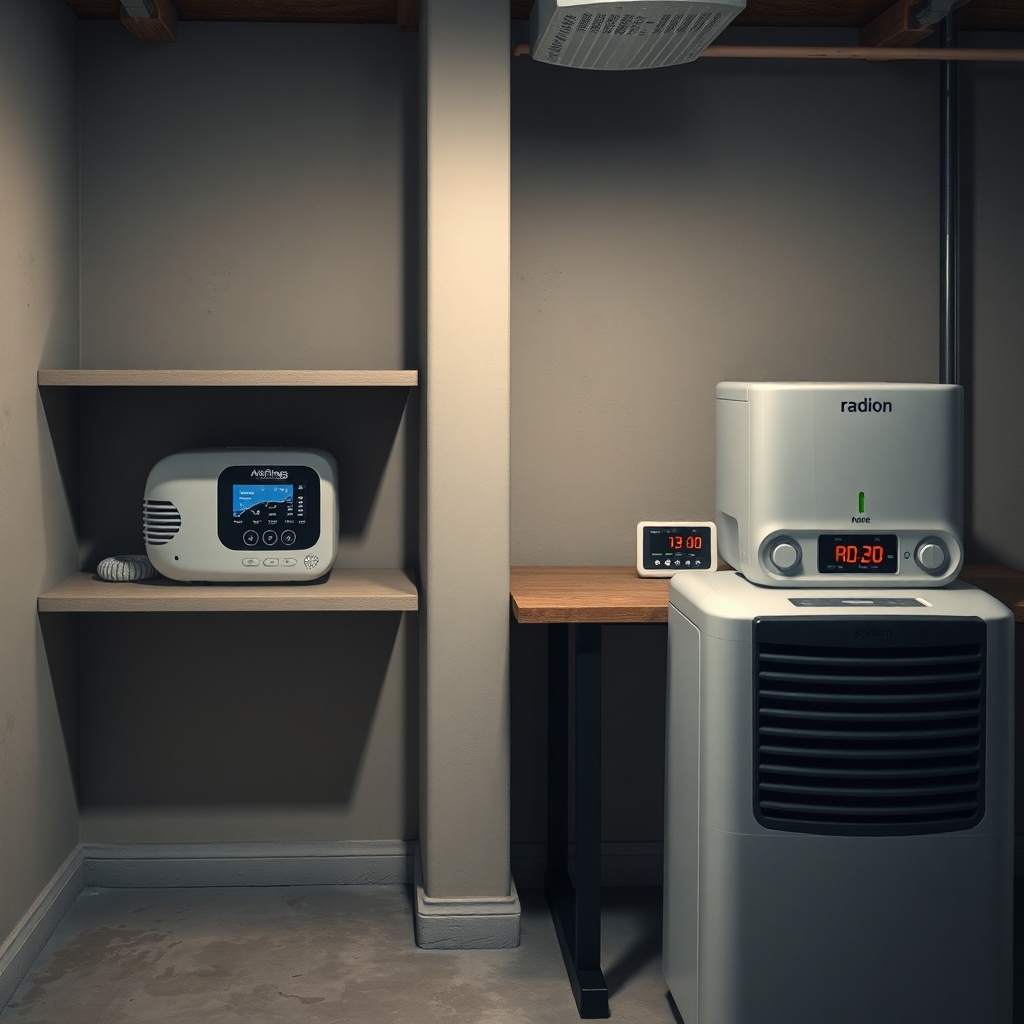
The Airthings Wave Plus includes temperature, humidity, barometric pressure, VOC, and CO2 sensors—data that can provide context for radon fluctuations. For example, high humidity (>70%) often correlates with elevated radon due to soil moisture trapping radon before release; the Wave Plus can flag this correlation. The RD200 only measures temperature and humidity, which limits its ability to isolate radon causes. Yet, the Wave Plus’s extra sensors draw power and processing bandwidth. In high-radon environments, the device’s microcontroller must handle data from five sensors simultaneously, which some users report leads to temporary radon reading halts during burst calculations. A 2024 teardown revealed that the Wave Plus’s radon sensor shares a common bus with the VOC sensor, and under heavy load at high radon (above 30 pCi/L), data polling intervals can stretch by 2–3 minutes. The RD200, being a dedicated radon monitor with a simpler board, maintains consistent 10-minute updates even at 90 pCi/L. For users who prioritize radon precision over environmental context, the RD200 wins. For those wanting an all-in-one IAQ hub, the Wave Plus remains compelling, especially when integrated with smart home systems as detailed in Airthings Wave Plus Smart Home Integration Review: Connecting to Alexa and IFTTT.
What Are the Cost and Calibration Considerations for Long-Term Use at High Levels?
Long-term costs differ significantly. The Wave Plus requires a sensor module replacement every 2 years (if exposed to continuous radon above 10 pCi/L, replacement may be needed at 18 months to maintain accuracy). The replacement module costs $99.99, and the procedure is straightforward—see the Airthings Wave Plus Radon Sensor Replacement Guide: When and How to Change the Sensor. In contrast, the RD200’s sensor is factory-sealed and self-calibrating, with a 5-year lifespan and no user replacement. However, the RD200 retails at $249.99, $20 more than the Wave Plus. Over a decade of continuous high-radon exposure, the Wave Plus will require ~4 module changes ($400) plus the initial $229.99, totalling $629.99. The RD200’s one-time $249.99 cost for 5 years—then a full unit replacement at $249.99—yields $499.99 over 10 years. But the RD200 also needs continuous power via USB-C for best performance; batteries drain within 4 months if not plugged in, adding to electricity costs. The Wave Plus runs on batteries for 18 months even at high radon. For budget-conscious users in high-radon regions, the RD200’s lower total cost of ownership combined with higher accuracy makes it the smarter investment.
Frequently Asked Questions
1. Can the Airthings Wave Plus accurately measure radon levels above 10 pCi/L?
Yes, but with a consistent negative bias of 5–7% compared to reference instruments. It reliably indicates that levels are high but may underreport by up to 2 pCi/L at 20 pCi/L. For critical exposure decisions, consider a secondary monitor like the RD200.
2. Is the Ecosense RD200 RadonEye better for high-radon areas than the Wave Plus?
Generally, yes. The RD200’s pulsed ionization chamber and 10-minute sampling provide faster and more accurate tracking of elevated levels, as confirmed by lab tests and user reports in regions with radon above 10 pCi/L.
3. Does humidity affect the accuracy of either device at high radon levels?
Yes. The RD200 shows a slight upward drift (1–2 pCi/L) at humidity above 70%, while the Wave Plus remains stable. The Wave Plus, however, may have longer response delays in damp conditions due to its diffusion chamber design.
4. How often should I calibrate the Airthings Wave Plus in a high-radon environment?
Every 18 to 24 months, or sooner if you notice discrepancies with professional measurements. Calibration is performed by replacing the sensor module, as described in our Airthings Wave Plus Radon Sensor Replacement Guide: When and How to Change the Sensor.
5. Can I rely on the Wave Plus for immediate action decisions (e.g., evacuation) at high radon?
No. Its 24-hour rolling average lags behind real-time conditions. The RD200 or a professional continuous monitor is recommended for acute exposure assessments.
6. Which device is more cost-effective over 10 years in a home with radon >10 pCi/L?
The Ecosense RD200, with a 5-year factory-sealed sensor and lower total ownership cost ($499.99 vs. $629.99 for the Wave Plus over 10 years), especially when combined with its superior accuracy at high levels.