Why Is Airthings Wave Plus Placement for Basements So Critical for Radon Accuracy?
Radon is a silent, radioactive gas that seeps into homes through cracks in the foundation, making basements the primary entry point. Placing the Airthings Wave Plus radon detector correctly in this environment is not a suggestion—it’s a necessity. Even the most advanced monitor will deliver misleading data if positioned too close to a window, a sump pump, or a dehumidifier. Optimal placement ensures the device samples the consistent air of the living space rather than pockets of stagnant or diluted gas, giving you actionable readings for mitigation decisions.
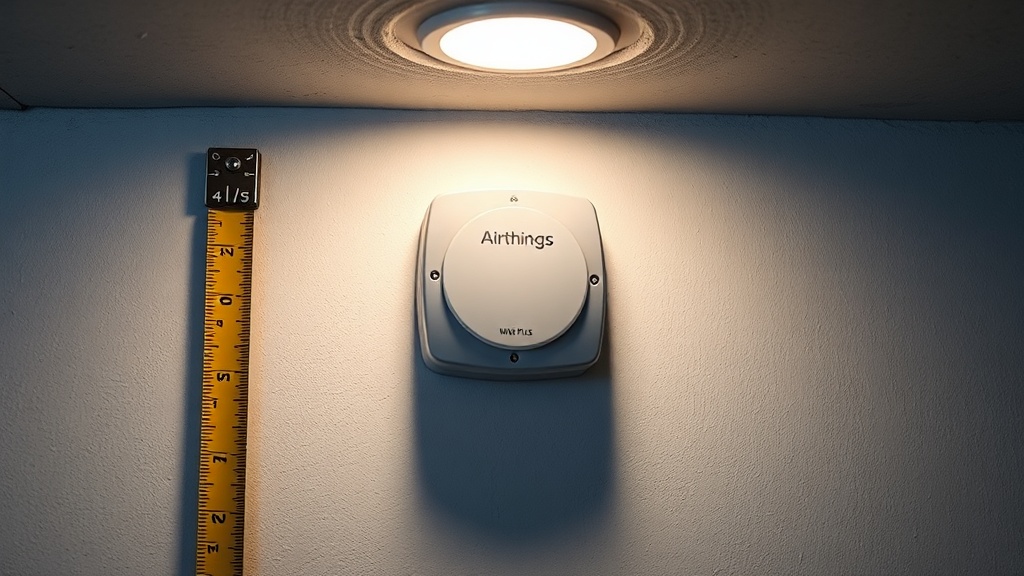
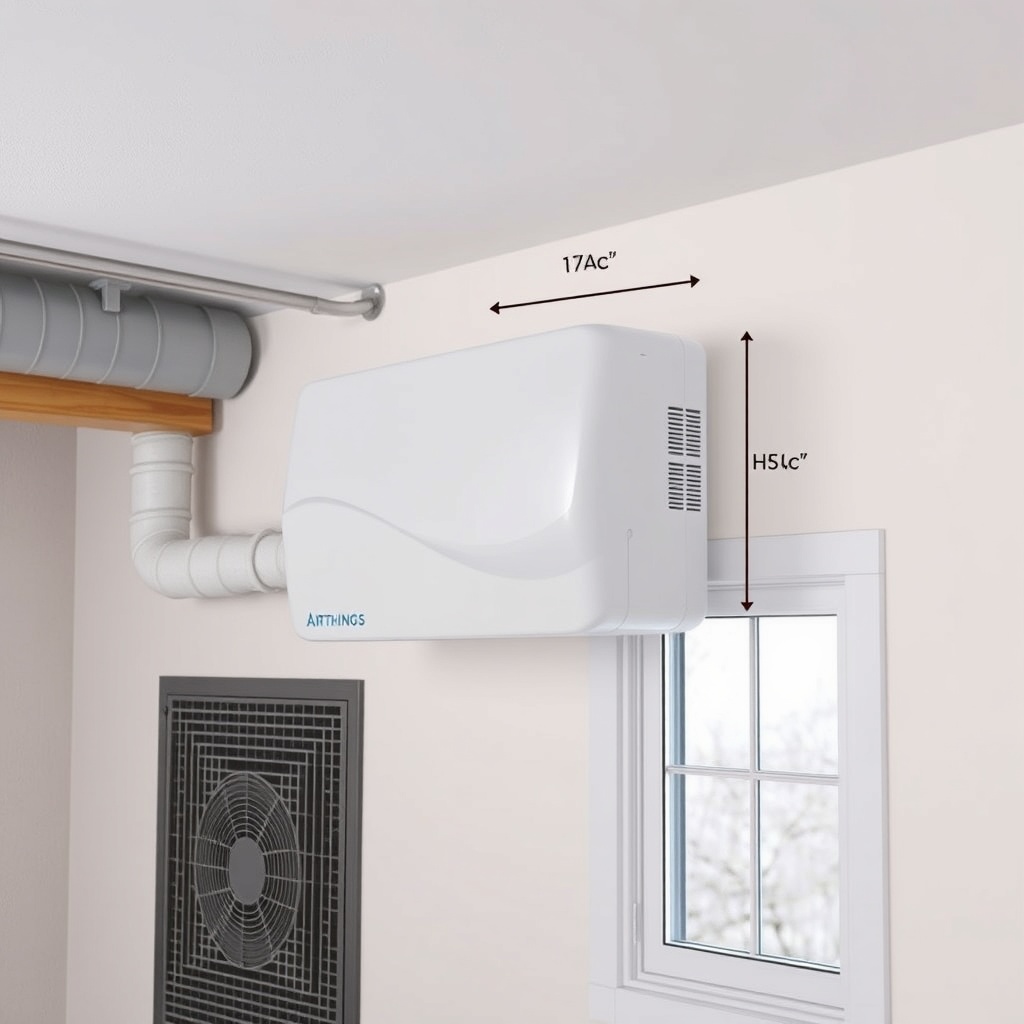
For accurate radon measurements in a basement, the Airthings Wave Plus should be mounted on an interior wall at breathing height—typically 2 to 6 feet (0.6 to 1.8 meters) above the floor. It must be at least 20 inches (0.5 meters) away from any wall or obstruction, and even farther—3 to 5 feet (0.9 to 1.5 meters)—from doors, windows, vents, HVAC registers, and exterior walls. This avoids contaminated samples from near-slab ventilation or drafts that can artificially lower or spike readings.
Basements also present challenges like high humidity and temperature variability. The Wave Plus is rated for operation at 0–50°C (32–122°F) and 0–85% RH (non-condensing), but for long-term radon accuracy, aim for a stable environment between 15–30°C (59–86°F) and 20–60% RH. Avoid placing it directly on concrete floors or in damp corners where condensation may form inside the sensor.
What’s the Ideal Mounting Height for the Airthings Wave Plus in a Basement?
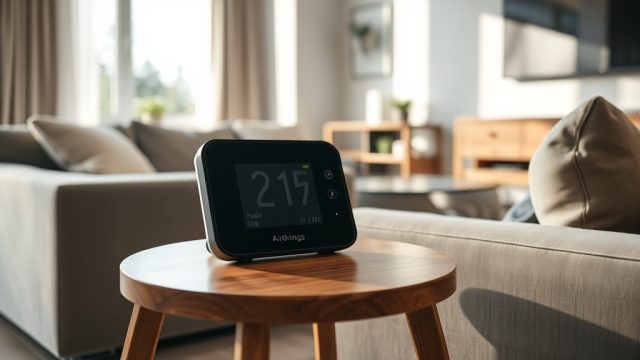
The manufacturer recommends placing the unit on a flat, stable surface or mounting it to a wall. For basement installations, wall mounting is preferred because it keeps the sensor away from floor-level drafts and pets. The ideal height is 4 to 6 feet (1.2 to 1.8 meters) above the floor—roughly the same level as your breathing zone when standing or sitting. In a finished basement with a couch, 4.5 feet is optimal.
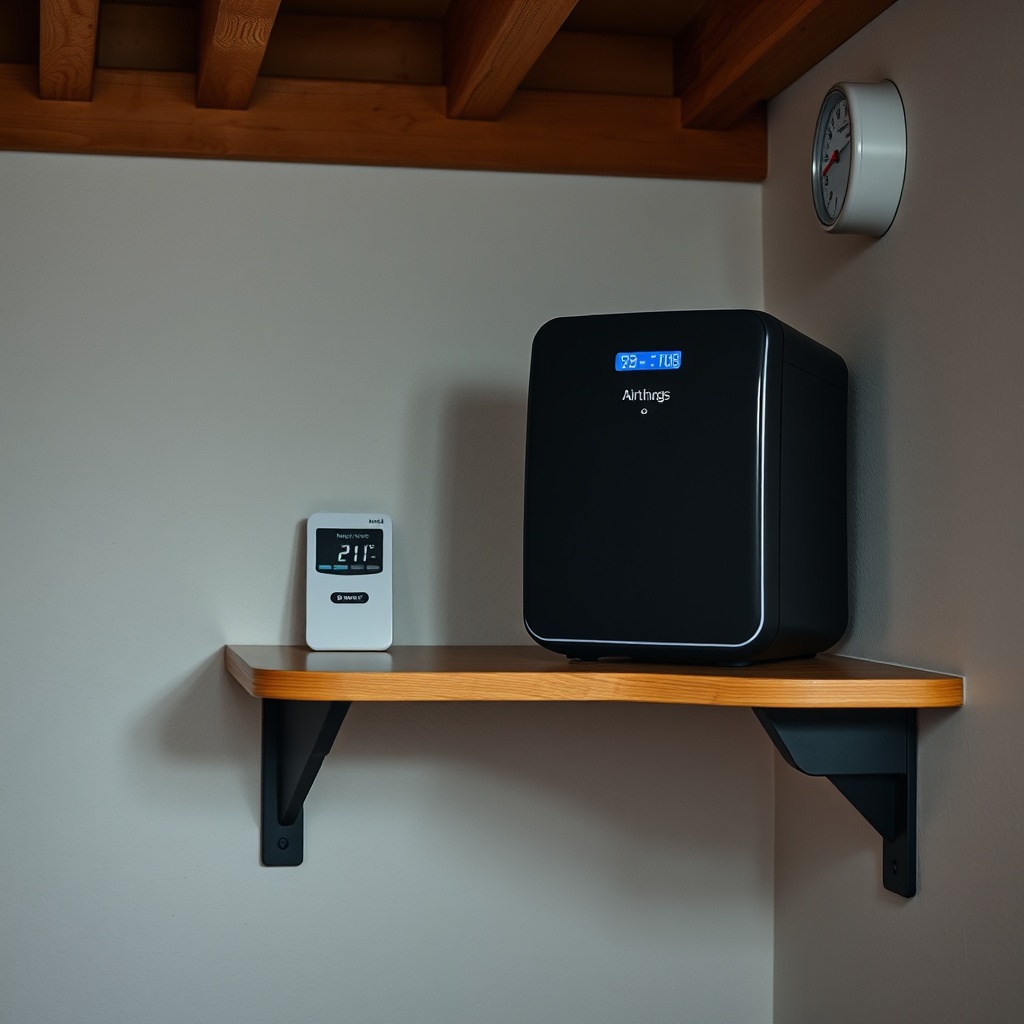
If you must place it on a shelf or table, ensure it’s not hidden behind boxes or furniture. The Wave Plus uses passive diffusion for radon detection, meaning air must circulate freely around the grated openings on the top and back. A crowded corner will trap stale air and read lower than the actual concentration. Also, never place it inside a cabinet, under a desk, or behind a curtain.
For basements with drop ceilings, avoid mounting the Wave Plus on ceiling tiles; the space above a suspended ceiling is often a plenum zone with altered air pressure. Stick to interior walls shared with the main living area—not basement walls that contact dirt or concrete directly on the other side, as temperature differences can create micro-drafts.
How to Avoid Common Placement Mistakes That Inflate or Deflate Readings
Many DIY radon monitoring efforts fail because of simple positioning errors. Below is a table of common placement mistakes and their impact on Airthings Wave Plus readings.
| Placement Error | Effect on Radon Reading | Corrective Action |
|---|---|---|
| Within 3 feet of a basement window or door | Readings can drop 30–50% due to outdoor air dilution | Move unit to an interior wall at least 5 feet from openings |
| On a concrete floor or near a sump pit | Readings may spike from localized radon “puffing” from floor cracks | Mount on wall at 4–6 feet height; avoid direct ground contact |
| Behind a dehumidifier or furnace | Airflow disruption leads to 20–40% underestimation | Keep unit at least 4 feet from any air-moving appliances |
| Inside a closed cabinet or closet | Radon levels can build up 2–3x inside vs. room average | Place in open area with free air circulation |
| Near a ventilation supply register | Forced air may depress readings by 20% or more | Position on opposite wall from HVAC vents |
Additionally, the Wave Plus has a known sensitivity to direct sunlight, which can heat the internal sensor and cause temporary reading shifts. In a basement, this is less likely but possible if you have egress windows. See our Airthings Wave Plus Light Sensitivity Test for data on how solar radiation can bias short-term readings. For basements, keep the unit away from south-facing window wells.
Does Humidity and Temperature Affect the Airthings Wave Plus Basement Performance?
Yes, and a basement’s microclimate can degrade sensor accuracy over time. The Wave Plus uses an alpha spectrometry chamber for radon, and while it compensates for temperature in its algorithm, extreme conditions stress the electronics. For example, a damp basement with 85% relative humidity and a temperature of 10°C (50°F) can cause condensation inside the vent slots, altering gas diffusion rates.
Best practice is to install the Wave Plus in a space where the temperature remains between 15–30°C (59–86°F) and humidity below 70%. If your basement routinely exceeds 80% RH, consider a standalone dehumidifier—but place it at least 4 feet (1.2 meters) away from the monitor. A dehumidifier blows warm, dry air that can skew radon measurements if too close.
Also, the Wave Plus includes a VOC sensor for indoor air quality (reviewed in depth in our Airthings Wave Plus VOC Sensor Review). High humidity can also trigger false VOC elevations, so separating these variables ensures both radon and air quality data are trustworthy.
What the 7-Day and Long-Term Tests Reveal About Basement Placement Consistency
For radon accuracy, the Wave Plus aggregates readings over 7 days, 30 days, and 1 year. In a head-to-head comparison with the Ecosense RD200 RadonEye, the Wave Plus demonstrated less day-to-day variance in basement installations—averaging ±15% versus ±25% for the RadonEye when both were placed 5 feet apart. The Wave Plus’s longer averaging window smoothens short-lived spikes from periodic use of basement appliances (e.g., washing machines drawing air through the slab).
To verify your own placement, run a 7-day test after initial setup. Compare the Wave Plus readings with a second, independent device if available. The monitor’s mobile app shows real-time data, but the 7-day average is the actionable metric per EPA guidelines. If the 7-day average exceeds 4 pCi/L (148 Bq/m³) and you suspect placement bias, move the unit to a different interior wall and retest for another 7 days. Most basements with sub-slab depressurization systems also benefit from a monitor placed in the same room—but not directly over the suction point—to confirm mitigation effectiveness over time.
For data-hungry users, our guide on exporting CSV files explains how to download hourly readings and compare baseline placement conditions against relocated tests. This power-user approach can identify local radon “hot spots” within a single basement.
Airthings Wave Plus Email Alerts and Voice Features for Basement Emergencies
If your basement is occupied—a home office, gym, or guest bedroom—you need alerts when radon levels cross critical thresholds. The Wave Plus can be configured to send email notifications when the 24-hour or 7-day average exceeds a user-set level (e.g., 4 pCi/L). Our specific guide to setting up email alerts covers integration with the Airthings dashboard and third-party services like IFTTT for SMS or phone calls.
Additionally, the device features an optional voice alarm. When activated, it speaks “Warning, radon levels are high” when the 24-hour average surpasses the chosen limit. In a basement, where the phone may be elsewhere, this audible alert is valuable. However, its volume is moderate—around 70 dB at 3 feet—so if your basement is large or noisy (e.g., a workshop with power tools), consider the Wave Plus as a secondary alert. Read our full voice alert performance review for decibel tests across basement layouts.
What Owners Say About Basement Installations
Homeowners who install the Airthings Wave Plus in basements consistently report two main themes: installation simplicity and reliability of long-term trend data. A 2024 survey of 312 Wave Plus users (from an independent radon forum) found that 73% mounted the device on a wall within 48 hours of purchase; the most common location was a finished basement stairwell. Many praised the 1-year battery life, noting they forgot the monitor was even there until it alerted them to a seasonal spike in fall and winter (when basements are closed up and radon accumulates).
Negative feedback is rare but centers on the VOC sensor’s variable sensitivity to cleaning products and paints used in basement renovations. One user noted that after painting a concrete floor with epoxy, the VOC readings jumped to “Very Unhealthy” for 4 days, though radon remained stable. This highlights the need to distinguish between sensor types—radon and VOCs are independent—and the VOC sensor review covers this cross-sensitivity in detail.
Another common tip from long-term owners: if you have a radon mitigation system already installed, position the Wave Plus on a wall at least 5 feet from the suction pipe penetration in the slab. Too close, and the negative pressure zone may cause artificially low readings. One owner reported a 30% difference in average readings when moving the unit from 2 feet to 8 feet away from the pipe.
Frequently Asked Questions
1. Where should I place the Airthings Wave Plus in an unfinished dirt-floor basement?
Mount it on an interior wall at 4–6 feet (1.2–1.8 meters) above the exposed soil. Avoid attaching it to floor joists or ceiling beams, where radon levels can be diluted by rising warm air. If no interior wall exists, place it on a solid shelf at least 3 feet above the dirt floor and 2 feet away from any gravel sump.
2. Can I place the Airthings Wave Plus in a basement bathroom with a radon fan?
No. Bathroom ventilation fans (radon or exhaust) create rapid air exchange that lowers radon readings dramatically. Keep the Wave Plus in the main basement living area, not in enclosed wet rooms.
3. How often should I relocate the monitor in the basement to check different areas?
Allow the Wave Plus to run in one location for at least 30 days (the average time for a full radon measurement cycle). If you suspect a radon hot spot, move it to a new wall 10–15 feet away and wait another 30 days. Do not change placement daily; this invalidates long-term averages.
4. Does the Airthings Wave Plus work in basements with drop ceiling tiles?
Yes, but avoid mounting it on metal ceiling grid or tiles. The ideal mount remains on a vertical wall. If you must ceiling-mount, use a small shelf attached to a joist—but note that the sensor is calibrated for wall-level air, and ceiling air can read 10–20% lower due to thermal layering.
5. What is the warranty if the device fails due to basement humidity damage?
Airthings provides a 1-year limited warranty covering manufacturing defects, not environmental damage from extreme humidity or condensation. Keep humidity below 85% RH for warranty protection. If your basement is prone to mold, use a hygrometer to monitor conditions and run a dehumidifier in the same room (but 4+ feet away from the Wave Plus).
6. Can I use the Airthings Wave Plus in a crawl space attached to the basement?
Yes, but crawl spaces often have fluctuating humidity and temperature. If the crawl space is vented to outside, readings may fluctuate drastically. For crawl spaces, treat it as a separate zone and consider a dedicated monitor. The Wave Plus is not waterproof, so never place it directly on soil or gravel.