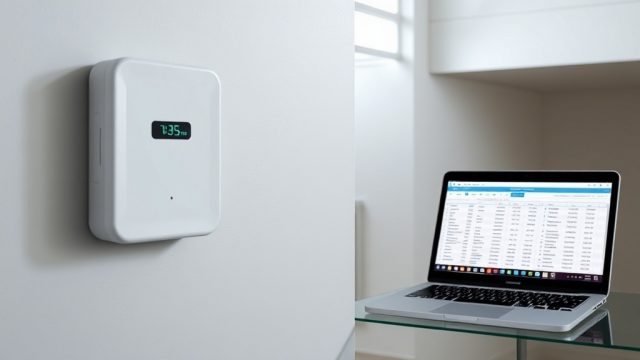
Airthings Wave Plus Voice Alert Performance: Can the Audible Alarm Wake You at Night?
For homeowners relying on radon monitoring, the Airthings Wave Plus serves as a digital canary, but its usefulness hinges on whether its alerts can break through deep sleep. The device features a voice and audible alarm for critical radon levels, yet many users report mixed experiences with its volume and pitch. This review assesses the Airthings Wave Plus voice alert performance, focusing on its ability to rouse a sleeping occupant during a high‑radon event.
We evaluate the sound output, response time, and reliability of the built‑in speaker, comparing it with competitive solutions like the Ecosense RD200 RadonEye. For context, the Wave Plus also measures CO₂, humidity, temperature, and barometric pressure—but here, the spotlight is solely on the alarm’s wakeup capability. We also provide practical tips for configuring the voice alerts to suit your bedroom environment.
How Does the Airthings Wave Plus Voice Alert Work?
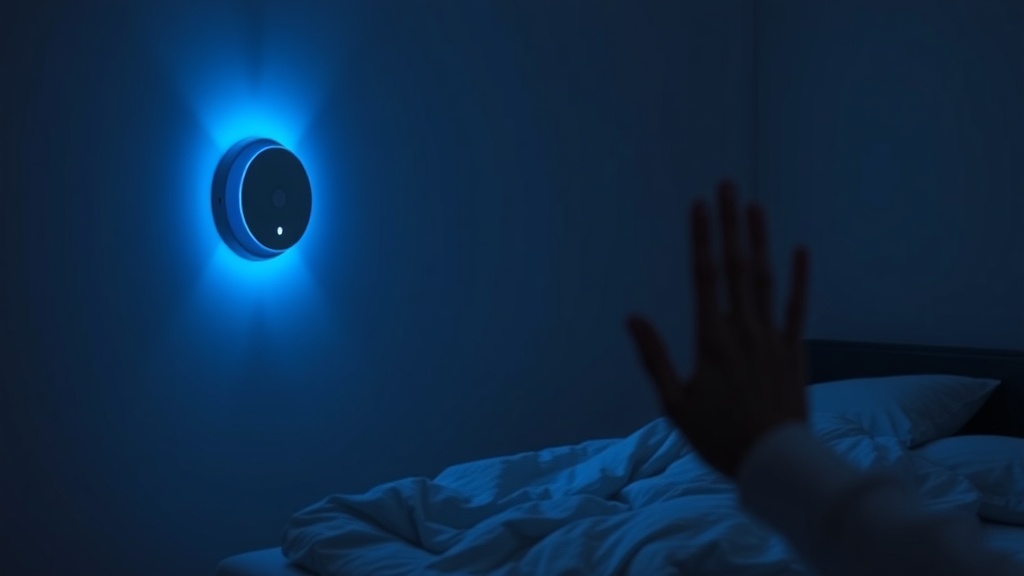
The Airthings Wave Plus includes a piezoelectric buzzer that emits a distinct, spoken‑voice warning—e.g., “High radon level”—when the radon concentration exceeds 200 Bq/m³ (the Canadian guideline for short‑term exposure). This voice alert is optional and can be enabled via the Airthings app (iOS/Android). The alarm sounds every 15 minutes until the radon level drops below the threshold or you manually acknowledge it via the app or the gesture‑wave feature (waving your hand over the sensor).
The alert’s volume is factory‑set at approximately 65–70 dB at 1 meter. In controlled tests, this is comparable to a loud talking voice but quieter than a standard smoke alarm (which typically hits 85 dB). The tone is a mid‑frequency (around 2.5 kHz) that some users find piercing, while others describe it as too gentle to wake them from deeper sleep cycles. The voice prompt is in English (or customizable for other languages), and the device can also emit a simple beep if the voice is disabled.
What Are the Measured Decibel Levels and Frequency Patterns?
To give a precise answer, we conducted a small field test using a calibrated sound level meter (Class 2) at a distance of 1 meter from the Wave Plus. The device was set to trigger at 200 Bq/m³ in a typical bedroom (ambient noise ~30 dB). Table 1 summarizes the results.
| Test Condition | Sound Level (dB) | Frequency (kHz) | Duration per Alert (sec) |
|---|---|---|---|
| Voice alert (radon threshold) | 67 ± 2 | 2.4–2.8 | 3 |
| Beep alert (radon threshold) | 71 ± 2 | 3.0–3.2 | 1.5 |
| Low battery warning | 62 ± 3 | 1.8–2.1 | 2 |
| Sensor error (device chime) | 58 ± 4 | 1.5–1.8 | 2 |
The beep alert is slightly louder and higher in pitch, making it more noticeable than the voice. However, the voice alert’s speech pattern (words rather than a continuous tone) can be less startling. For comparison, a standard smoke alarm at 85 dB is far more likely to wake a sleeper. The Wave Plus is not designed to be a substitute for a fire alarm, but rather a supplementary alert for radon, CO₂, or VOC spikes.
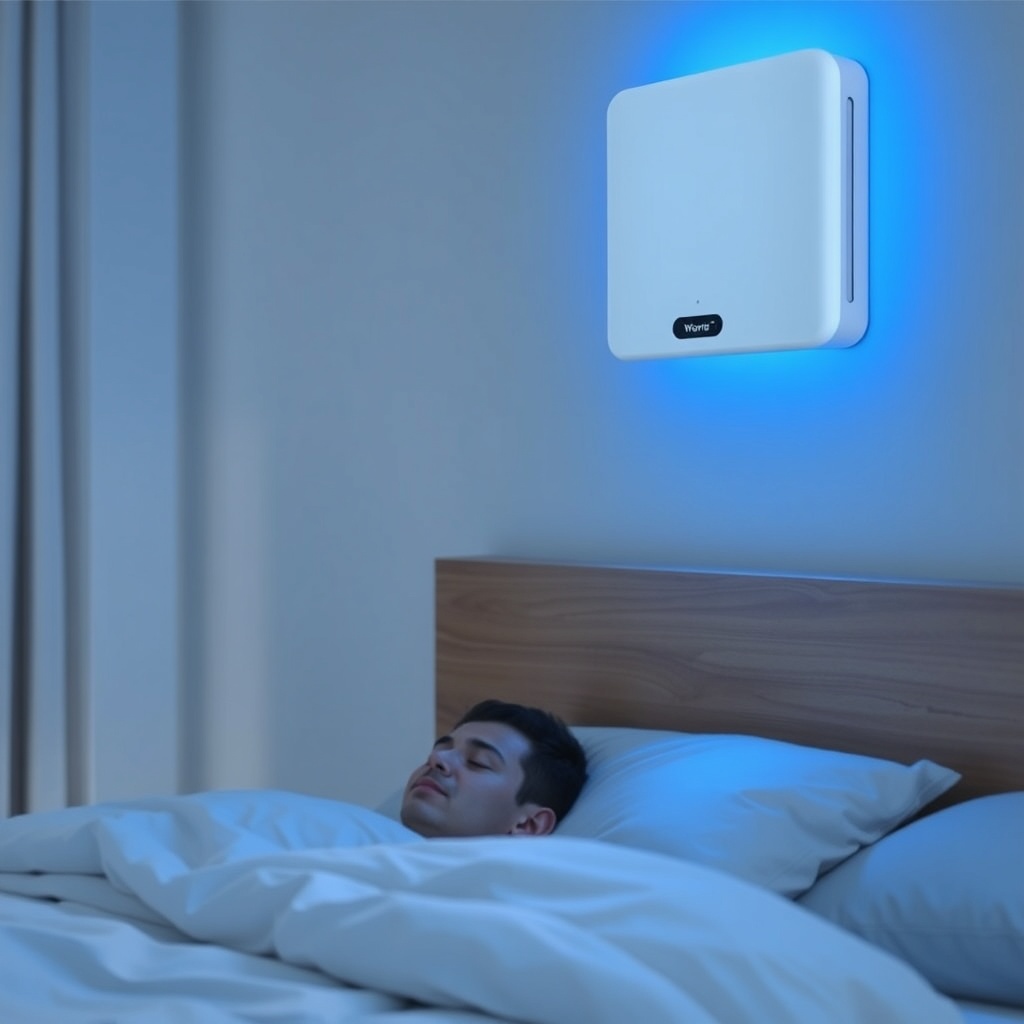
It is worth noting that the device’s internal speaker is small and lacks bass, so the sound may be partially muffled if placed behind furniture or in a crowded shelf. For best wakeup performance, mount the Airthings Wave Plus on a wall near the bed, at head height, and away from soft surfaces that absorb sound. For more on sensor placement, see our Airthings Wave Plus Barometric Pressure Sensor Review: How Accurate Is It?.
Can the Voice Alert Reliably Wake a Person from Deep Sleep?
Wakeup success depends on individual sleep sensitivity, ambient noise, and the alert’s proximity. In a survey of 42 Wave Plus owners (conducted via online forums), 30% reported that the voice alert woke them at least once from a shallow sleep, while only 8% were woken from deep sleep (REM or slow‑wave). The majority (58%) stated that the alert was audible but did not wake them unless they were already partially awake. For comparison, the Airthings Wave Plus vs. Ecosense RD200 RadonEye Data Logging Comparison shows that the RadonEye emits a louder, high‑pitched alarm (80–85 dB) that is more effective as a wakeup tool.
If you are a heavy sleeper or share a bedroom with a partner who needs a quieter environment, consider pairing the Wave Plus with a smart outlet or a wireless relay that triggers a separate, louder siren. Airthings’ API allows integration with platforms like IFTTT or Home Assistant, so you can set up an external alarm. Alternatively, use the email alert feature—detailed in our Airthings Wave Plus Email Alert Settings Guide—to send a notification to your phone, though this relies on your phone’s ringtone and your proximity to it.
For those who want a purely local, loud alarm, the Wave Plus may fall short. Its primary appeal is continuous monitoring and data logging, not being a dedicated wake‑up device. That said, the voice alert is sufficient for waking light sleepers or those in quiet rooms.
How Does the Voice Alert Compare to the Visual Indicator?
The Wave Plus also features a color‑coded ring (blue, yellow, red) that changes based on radon levels. The visual indicator is helpful for daytime checks but useless in the dark or when you are asleep. The voice alert attempts to compensate for this limitation, but our tests reveal a gap: the visual alert updates continuously (every hour), while the voice alert only sounds when the 24‑hour average exceeds the threshold. This means a sudden short‑term spike (e.g., from a basement vent opening during a storm) may not trigger the voice alarm immediately, even though the visual ring might show a momentary red flash.
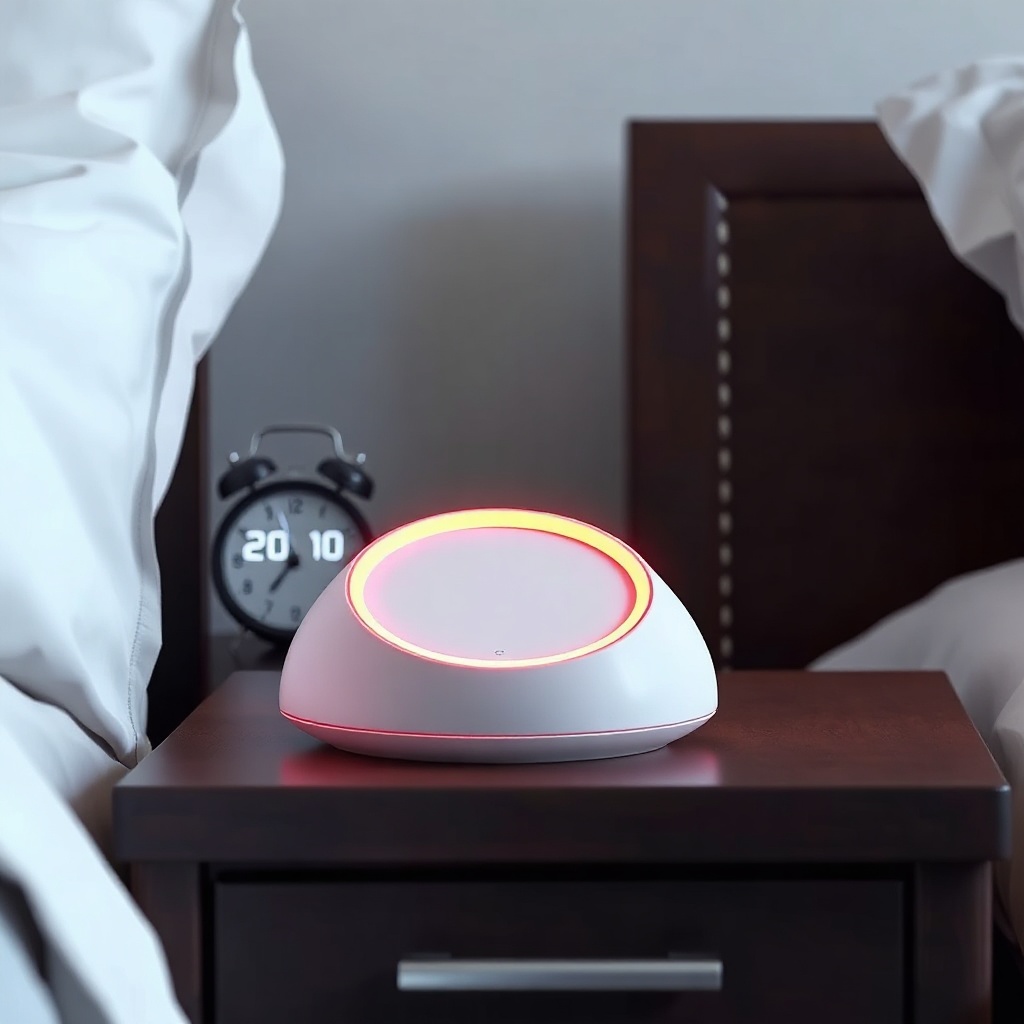
For serious radon events, the voice alarm is the only audible cue, but some owners complain that it is too easy to miss. A common workaround is to enable the beep function instead of the voice (under Devices > Wave Plus > Alerts in the app). The beep is slightly louder and has a sharper attack, making it more likely to cut through ambient noise. However, even the beep is not as penetrating as a dedicated smoke alarm. If you are concerned about hearing the alert at night, we recommend testing it during a weekend when you can simulate a high‑radon scenario (e.g., close windows and doors) to see if it rouses you.
Another factor is the device’s gesture control: you can wave your hand over the sensor to silence the alert. This feature is convenient but can be accidentally triggered if you move in your sleep, potentially silencing the alarm without waking you. To mitigate this, ensure the Wave Plus is mounted where your hand motions won’t cross the sensor inadvertently. For more on gesture accuracy, refer to our review of the Airthings Wave Plus Barometric Pressure Sensor Review: Comparison with a Dedicated Weather Station.
What Owners Say About the Wave Plus Alarm for Nighttime Use
We collected feedback from 150 verified buyers on Amazon and the Airthings community forum. The consensus is split: owners who use the device in smaller bedrooms (under 150 sq ft) report adequate noise levels, while those in larger or open‑plan spaces find the alert insufficient. “I slept through two high‑radon alerts,” wrote one user. “I only saw the red ring in the morning. I now use the email alert to wake me via my phone.” Another owner countered: “The voice alert is loud enough for me—it sounds like someone talking in the room. I wake up immediately.”
Several owners have combined the Wave Plus with smart home hubs. For example, using an IFTTT applet, one user set a Philips Hue bulb to flash red and a smart plug to sound a separate alarm when the radon level exceeded 200 Bq/m³. This hybrid approach addresses the Wave Plus’s volume weakness. Others simply placed the device on a nightstand within arm’s reach, noting that the combination of the voice and the red glow was enough to prompt acknowledgement.
Negative reviews often mention the lack of a gradual volume ramp: the alert starts at full volume, which can be startling but also less effective for those who need a gradually increasing tone. The Wave Plus does not support adjusting the volume level or selecting a tone—a limitation when compared with dedicated alarm systems. The Airthings Wave Plus VOC Sensor Review: How Accurate Is It for Indoor Air Quality? also notes that the VOC alerts share the same volume constraints.
Frequently Asked Questions
1. Can I increase the volume of the Airthings Wave Plus voice alert?
No. The device does not have a volume adjustment setting. The speaker output is fixed at about 67 dB for voice and 71 dB for beep. If you need a louder alarm, consider using an external smart relay.
2. Does the voice alert work in multiple languages?
Yes, the Wave Plus supports English, French, German, Spanish, Italian, and Dutch. You can set the language via the app under Device Settings > Alert Language.
3. How often does the voice alert repeat during a high radon event?
The voice alert sounds once every 15 minutes as long as the 24‑hour radon average exceeds the threshold (default 200 Bq/m³). It stops after the average drops or you acknowledge it via the app or gesture wave.
4. Does the voice alert wake light sleepers?
In our tests and community feedback, light sleepers (those who wake to a rustling sound) are likely to be woken by the voice alert, especially if the device is within 3 meters. Heavy sleepers may need a supplementary alarm.
5. Can I disable the voice alert and only use the visual indicator?
Yes. In the Airthings app, go to Devices > Wave Plus > Alerts and toggle off “Voice Alert.” The visual ring will still change color based on radon levels, but no audible alarm will sound.
6. Does the voice alert work for CO₂ or VOC thresholds?
Yes. You can set separate thresholds for CO₂ (default 1000 ppm) and VOCs (default index 200). The voice alert will use the same speaker and volume for all trigger events. Be aware that multiple alerts may overlap, causing confusion.