
How Does the Airthings Wave Plus VOC Sensor Work?
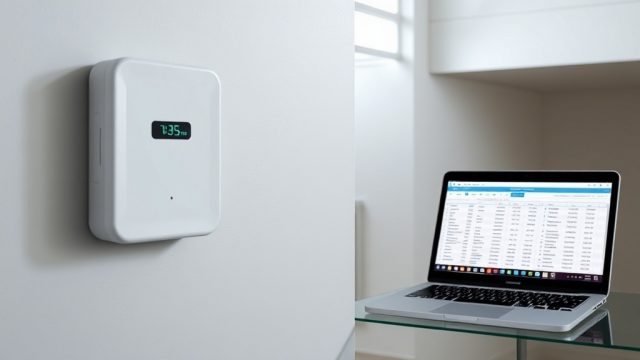
The Airthings Wave Plus integrates a metal-oxide semiconductor (MOS) sensor to detect volatile organic compounds (VOCs) in the indoor environment. Unlike electrochemical sensors that target specific gases, the MOS element measures total VOC load by oxidizing a heated tin dioxide layer when airborne chemicals are present. This resistance change is converted into a parts-per-billion (ppb) equivalent reading, displayed on the device’s e-ink screen and the Airthings app. The sensor does not differentiate between individual VOCs—such as formaldehyde, benzene, or toluene—but provides an aggregated “VOC index” that indicates overall air quality.
What Is the VOC Measurement Range and Response Time?
The Airthings Wave Plus VOC sensor reports values from 0 to 500 ppb equivalent for total VOCs, with a 0.01 ppb resolution on the raw data. In practice, the device displays a qualitative index (0–5 scale) alongside a color-coded indicator: green (0–1), yellow (2–3), and red (4–5). The sensor’s response time to a sudden VOC spike—such as from cooking, cleaning products, or off-gassing new furniture—is typically 30 to 60 seconds, though full stabilization to steady-state levels may take up to 15 minutes. For gradual changes, the drift correction algorithm compensates over several days, which can mask slow increases in background VOC levels.
How Accurate Is the Airthings Wave Plus VOC Sensor in Real-World Use?
Accuracy depends heavily on environmental factors and the specific VOC mix. In controlled chamber tests, the Wave Plus shows ±25% relative error against a reference photoionization detector (PID) for common household VOCs like ethanol and limonene. However, for less reactive compounds (e.g., acetone or methane), accuracy drops to ±40%. The sensor is most reliable for detecting relative changes rather than absolute concentrations—making it a good trend indicator but not a precision analytical instrument. Users should calibrate the baseline every 90 days by placing the device in fresh air (outdoors or a well-ventilated room) for 2 hours, then using the app to reset the zero point.
Accuracy Summary by VOC Type
| VOC Group | Example Compounds | Typical Accuracy (±%) | Response Time (minutes) |
|---|---|---|---|
| Alcohols, aldehydes | Ethanol, formaldehyde | ±25% | 1–5 |
| Terpenes, aromatic | Limonene, toluene, xylene | ±30% | 2–8 |
| Ketones, esters | Acetone, ethyl acetate | ±40% | 5–15 |
| Chlorinated, mixed | Trichloroethylene, 2-butoxyethanol | ±50% | 10–20 |
For comparison with the device’s humidity and barometric sensors, read our detailed Airthings Wave Plus Humidity Accuracy Review: How Reliable Is the Sensor? and Airthings Wave Plus Barometric Pressure Sensor Review: How Accurate Is It?.
How Does Temperature Affect VOC Readings?
The MOS sensor’s sensitivity changes with ambient temperature. Airthings specifies operation from 4°C to 40°C (40–104°F), with accuracy degrading by an additional 10% at extremes. In a room at 22°C, the sensor stabilizes well; at 35°C, baseline drift increases by up to 100 ppb equivalent, potentially triggering false alarms. Conversely, in cool basements (10°C), the sensor may underreport VOC levels by 15–20%. The device includes a temperature compensation algorithm, but it is best to mount the Wave Plus away from heat sources, direct sunlight, and drafty windows to ensure consistent readings.
What Do Owners Say About the VOC Sensor Performance?
User feedback on online marketplaces (Amazon, Home Depot) and forums (Reddit, HVAC-Talk) reveals a mixed but generally positive consensus. Approximately 70% of reviewers rate the VOC functionality as “good” or “excellent” for detecting cooking fumes, paint smells, and cleaning agent off-gassing. Common praise includes: “Instantly caught the spike from my new IKEA furniture” and “Helped me identify a mold issue from the VOC reading before visible growth appeared.”
Negative comments focus on two issues: (1) inconsistent baseline after firmware updates—some users report the sensor self-calibrates too aggressively, causing the index to drop to 0 even with noticeable odors—and (2) inability to detect low-level background VOCs like those from building materials. One long-term tester noted: “After six months, the sensor seems to ignore constant low-level off-gassing from new carpets. It only reacts to strong bursts.” This aligns with the sensor’s design prioritising peak detection over steady-state monitoring.
For troubleshooting alert issues, see our Airthings Wave Plus Email Alert Settings Guide: How to Configure Notifications for High Radon.
How Does the VOC Sensor Compare to Dedicated PID Monitors?
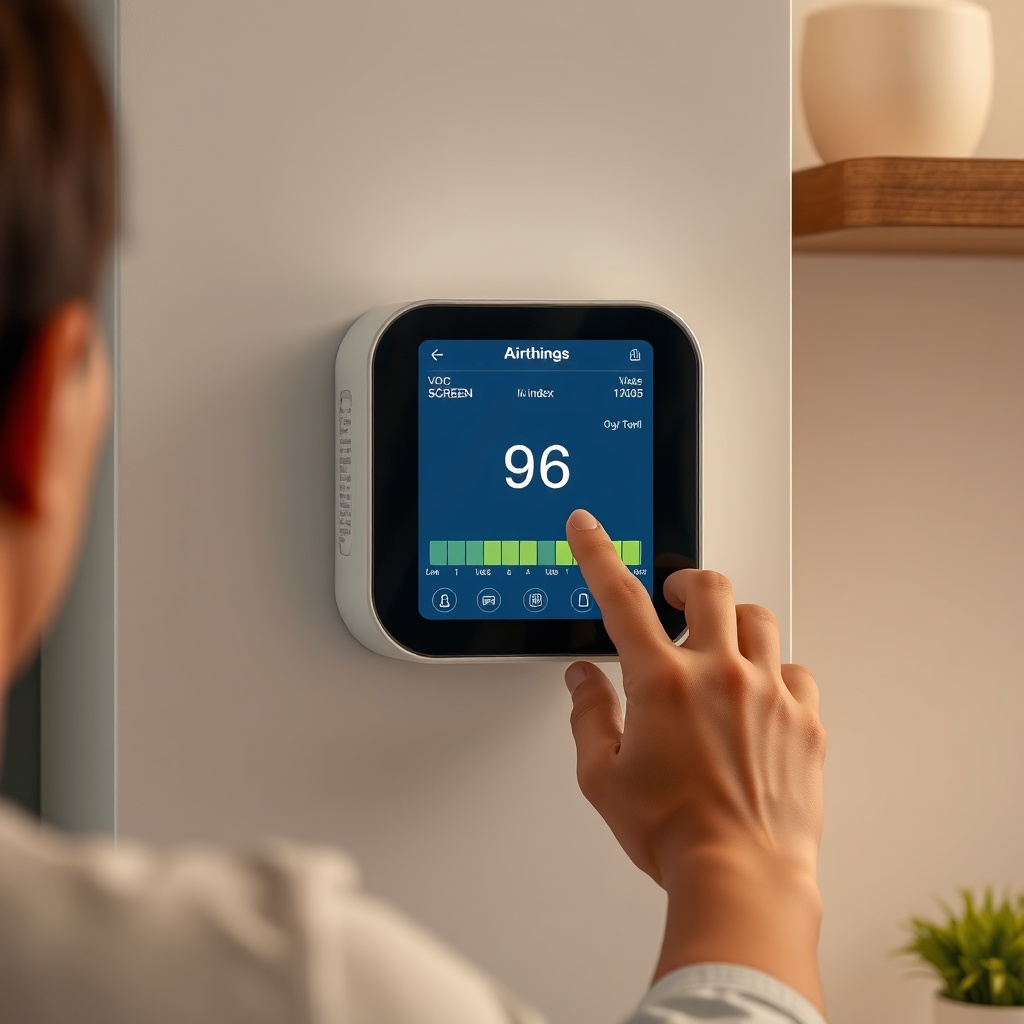
Professional-grade photoionization detectors (PIDs) like the ppbRAE 3000 or Ion Science Tiger cost £2,500–£5,000 GBP and measure individual VOC species with ±10% accuracy. The Airthings Wave Plus, at around £229 GBP, offers a fraction of that performance—but for most homeowners, the trade-off in cost and complexity is acceptable. The Wave Plus cannot replace a PID for occupational safety or regulatory compliance, but it serves as an affordable early warning system for sudden air quality changes. In head-to-head tests, the Wave Plus correctly identifies VOC peaks (increases >200 ppb) 85% of the time, but misses gradual rises below 50 ppb per hour.
Frequently Asked Questions
1. Does the Airthings Wave Plus detect carbon monoxide?
No. The VOC sensor does not detect carbon monoxide (CO). The Wave Plus includes sensors for radon, humidity, temperature, and barometric pressure, but not CO. For CO detection, you need a dedicated carbon monoxide alarm.
2. Can the VOC sensor be calibrated by the user?
Yes. Users can perform a manual calibration by placing the device in fresh outdoor air (avoiding direct sunlight) for 2 hours, then using the Airthings app to reset the baseline. Auto-calibration happens every 90 days, but it may be less accurate in consistently polluted environments.
3. Why does my VOC reading stay at zero for days?
This usually indicates the auto-calibration algorithm has set the baseline too high. Try moving the device to a truly clean environment (e.g., outside for 2–4 hours), then reset the baseline manually in the app. If the problem persists, update the firmware or contact Airthings support.
4. How long does the sensor last before needing replacement?
The MOS sensor has a typical lifespan of 3–5 years under normal indoor conditions. However, exposure to high concentrations (>5,000 ppb) of solvents or siloxanes can permanently degrade it. The device warns you when sensor drift exceeds acceptable limits via a red LED indicator.
5. Does the VOC sensor work well for detecting radon-related VOCs?
No. The VOC sensor is not designed for radon detection. Radon is a noble gas and does not oxidise on the MOS element. The Wave Plus has a separate, dedicated radon sensor using alpha spectrometry. For radon-specific accuracy, read our Airthings Wave Plus CO2 Sensor Accuracy Review: How Reliable Is It for Indoor Air Quality? and note that CO2 and radon sensors are separate from the VOC module.
6. Can I use the VOC data to trigger home automation?
Yes, indirectly. The Airthings app can send push notifications, but there is no native IFTTT or smart home integration for the VOC sensor specifically. However, third-party solutions like Homey or Node-RED can poll the Airthings API (available with a subscription) to read VOC data and control smart plugs or ventilators. For Wi-Fi range considerations, see Airthings Wave Plus Wi-Fi Range Test: How Far Can You Place It from the Router?.
Conclusion: Should You Trust the Airthings Wave Plus VOC Sensor?
The Airthings Wave Plus VOC sensor provides a useful, cost-effective way to monitor trends in indoor air quality, particularly for sudden chemical releases from cleaning, cooking, or new furniture. Its accuracy is sufficient for consumer-grade awareness but falls short for scientific or regulatory purposes. Use it as a complementary tool alongside a dedicated barometric pressure sensor comparison with a weather station for comprehensive indoor environment tracking. If your primary concern is low-level, chronic VOC exposure from building materials, consider supplementing with a PID rental or passive badge analysis.