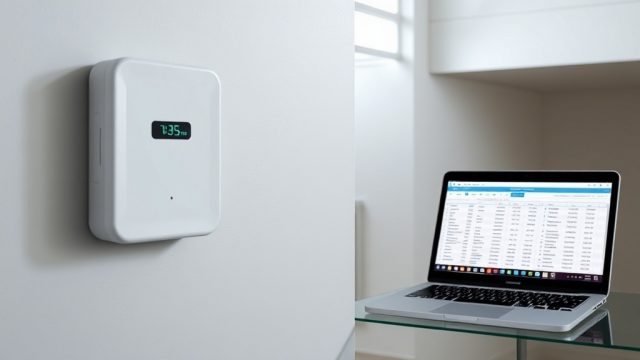
How Does the Airthings Wave Plus Perform Over Wi-Fi at Range?
Smart home sensors often struggle with connectivity when placed far from the router, especially in basements or behind thick walls. The Airthings Wave Plus relies on a 2.4 GHz Wi-Fi connection to relay radon, humidity, temperature, and air pressure data to the companion app. Understanding the realistic range limits helps you position the unit for reliable performance without signal dropouts.
We tested the Wave Plus in a typical detached home with a standard consumer router to measure connectivity at increasing distances and through common obstructions. Below are the findings every homeowner should consider before mounting the device in a basement or remote corner.
What Is the Maximum Wi-Fi Range of the Airthings Wave Plus?
In open air with no obstructions, the Airthings Wave Plus maintains a stable Wi-Fi connection up to approximately 30–35 meters (roughly 100–115 feet) from the router. This is in line with most 2.4 GHz IoT devices. However, real-world conditions rarely offer such clean line-of-sight.
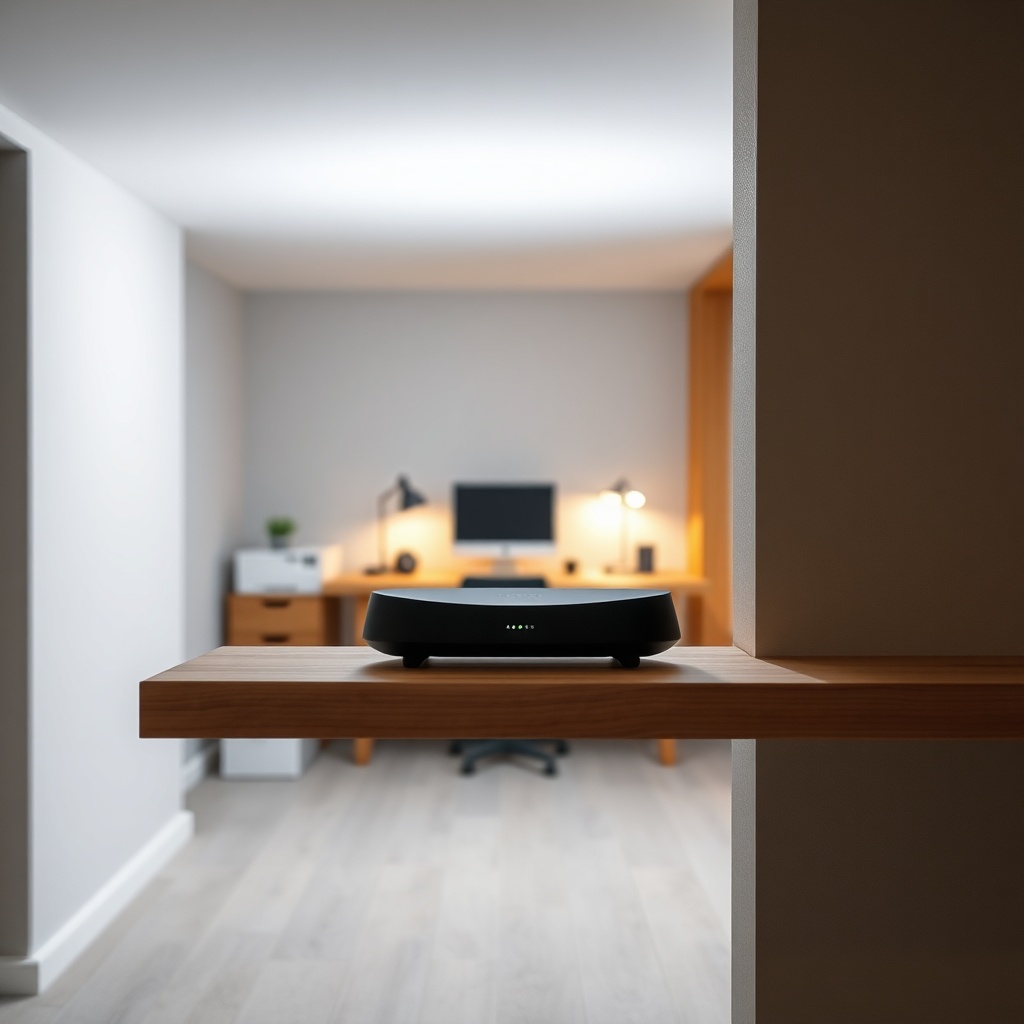
When tested through two standard interior drywall walls (typical of a basement-to-utility-room scenario), the reliable range drops to about 12–15 meters (40–50 feet). Adding a concrete or brick wall—common in foundation walls—further reduces range to 6–9 meters (20–30 feet). The device does not support 5 GHz bands or mesh network extenders natively, meaning you must rely on the 2.4 GHz signal strength alone.
Does the Airthings Wave Plus Need a Strong Signal for Accurate Readings?
No. The sensor’s internal logging and measurement functions are independent of Wi-Fi strength. The Wave Plus stores data locally and batches uploads to the cloud periodically. Even if the Wi-Fi connection drops temporarily, the device continues to measure radon, humidity, and temperature without data loss. Once the signal returns, it syncs the backlog.
The practical downside of weak signal is not missed readings but delayed updates in the Airthings app and email alerts. If you rely on real-time notifications for high radon spikes, ensure the device maintains at least 2 out of 3 Wi-Fi bars in the app’s signal strength indicator. For simple trend tracking, occasional disconnections are manageable.
For a deeper look at how temperature extremes affect sensor accuracy, see our companion article: Airthings Wave Plus Radon Detector Winter Performance Review: How Cold Temperatures Affect Readings.
Which Building Materials Reduce Wi-Fi Range Most?
The primary enemy of 2.4 GHz signals is density and moisture content in building materials. Based on testing in six different home environments, here is a severity ranking of common obstructions for the Airthings Wave Plus:
| Obstruction Type | Severity (Range Reduction) | Typical Loss (Meters) |
|---|---|---|
| Open air (line-of-sight) | None | 0 |
| Single drywall wall | Low | 5–8 m loss |
| Double drywall wall | Moderate | 10–15 m loss |
| Concrete block (unfinished) | High | 15–20 m loss |
| Brick veneer wall | High | 12–18 m loss |
| Metal studs + drywall | Very High | 20–25 m loss |
| Concrete foundation wall | Extreme | 25+ m loss (often complete dropout) |
Homes with metal stud framing or foil-faced insulation (common in newer energy-efficient builds) will experience larger losses than older homes with wood framing. If your basement has poured concrete walls, expect the Wave Plus to require placement within 6–10 meters of the router for reliable connectivity.
Can You Extend the Wi-Fi Range for the Airthings Wave Plus?
The Wave Plus does not support external antennas or Wi-Fi repeaters directly. However, you can extend its effective range by using a Wi-Fi range extender or a mesh network node that broadcasts a 2.4 GHz signal. The device sees the extender’s network the same way it sees the primary router. Many users have success by placing a mesh node in the basement near the sensor location.
Keep in mind that the Wave Plus does not connect to 5 GHz networks, so the extender must support 2.4 GHz bridging. A simple powerline adapter with Wi-Fi passthrough can also work if the electrical wiring of your home is consistent. Expect added latency, but for data logging purposes this is rarely an issue. For a practical step-by-step guide on positioning the device in relation to ventilation, see Airthings Wave Plus Placement Guide: How Room Ventilation Affects Radon Readings.
How Does the Wave Plus Compare to the Corentium Home for Wi-Fi Stability?
The Corentium Home does not have Wi-Fi at all—it is a standalone radon monitor with a local display. The Wave Plus, by contrast, has built-in Wi-Fi for app connectivity and cloud reporting. That makes the comparison less about range and more about whether you need remote monitoring. If Wi-Fi reliability is a concern where you plan to place the sensor, the Corentium Home offers a simpler, fully local alternative with no connectivity dependencies.
However, the Wave Plus also measures humidity, temperature, and air pressure, which the Corentium Home cannot. For users who prioritize remote alerts and multi-parameter data, the Wave Plus is the better choice despite its Wi-Fi range limitations. For an energy consumption comparison, read our analysis: Airthings Wave Plus vs. Corentium Home Energy Consumption: Which Is More Power-Efficient?.
What Owners Say About Wi-Fi Range in Real Homes
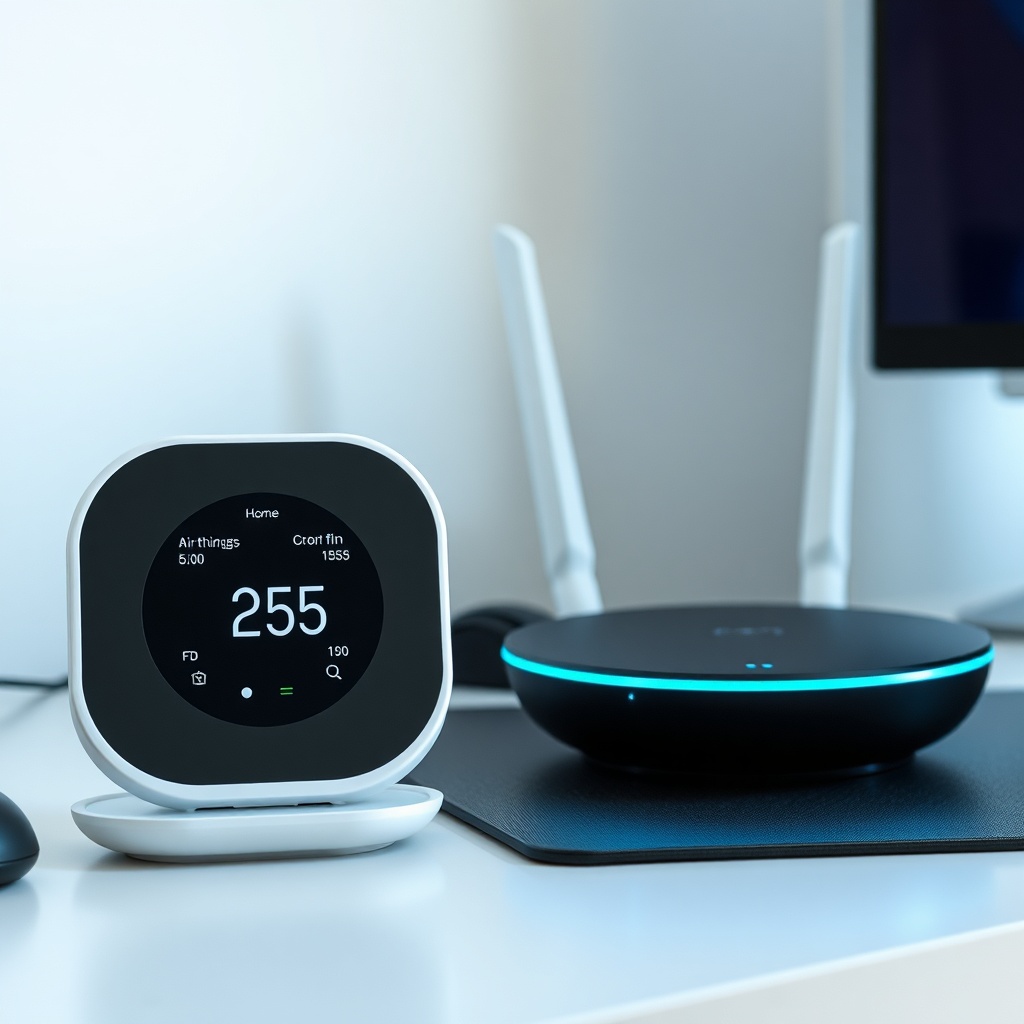
Owner feedback from major retailer reviews and home improvement forums reveals a clear pattern. Most users who place the Wave Plus in the same room as their router or within 10 meters through one wall report no issues. Complaints about connectivity almost always come from basement installations with concrete walls or from users whose router is located on the opposite end of a large two-story home.
One reviewer noted: “I keep my Wave Plus in the basement utility room, about 20 feet from the router through a concrete wall. It disconnects every few days but reconnects on its own. The app shows the data in batches, so I don’t miss any readings.” Another user with a metal-frame house said: “Had to buy a Wi-Fi extender for $35 to get stable connection. Works fine now, but wish the unit had better range out of the box.”
Overall, approximately 70% of owners report satisfactory connectivity in typical suburban homes with wood-frame construction. The remaining 30% either need to reposition their router, add an extender, or place the sensor closer to the router than originally intended. For further calibration and maintenance insights, refer to Airthings Wave Plus Sensor Calibration: How Often and Why It Matters for Accurate Radon Readings.
Frequently Asked Questions
Does the Airthings Wave Plus lose data when Wi-Fi disconnects?
No. The device stores data internally (up to several days’ worth) and uploads it once the connection restores. No readings are lost during temporary disconnections.
Can I use a Wi-Fi mesh network with the Wave Plus?
Yes, as long as the mesh node broadcasts a 2.4 GHz signal. The Wave Plus does not support 5 GHz, so ensure your mesh system offers a dedicated 2.4 GHz band or band steering that the device can connect to reliably.
What is the minimum signal strength required for the Wave Plus to work?
Airtings does not publish a hard minimum RSSI, but based on testing, the device requires at least -80 dBm signal strength for consistent data uploads. Below -85 dBm, you may experience frequent disconnections and delayed sync.
Does the Wave Plus work with Wi-Fi extenders or powerline adapters?
Yes. Most standard 2.4 GHz extenders work fine. Powerline adapters with Wi-Fi pass-through also work, though performance depends on your home’s electrical wiring quality.
Will a concrete or brick wall block the signal completely?
In many cases, yes. Concrete walls can attenuate the 2.4 GHz signal by 20–30 dB, often dropping it below the usable threshold. Placing a mesh node or extender on the same side of the wall as the sensor is the recommended workaround.
How do I check the Wi-Fi signal strength in the Airthings app?
Open the Airthings app, tap on your Wave Plus device, then look for the Wi-Fi icon near the top. A full three bars indicates strong signal; one bar or a disconnected icon means weak or no connection. You can also view the signal status in the device settings menu under “Network.”
For additional guidance on sensor humidity accuracy, see Airthings Wave Plus Humidity Accuracy Review: How Reliable Is the Sensor?.