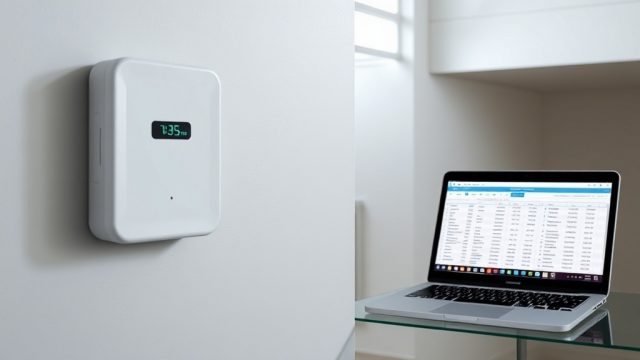
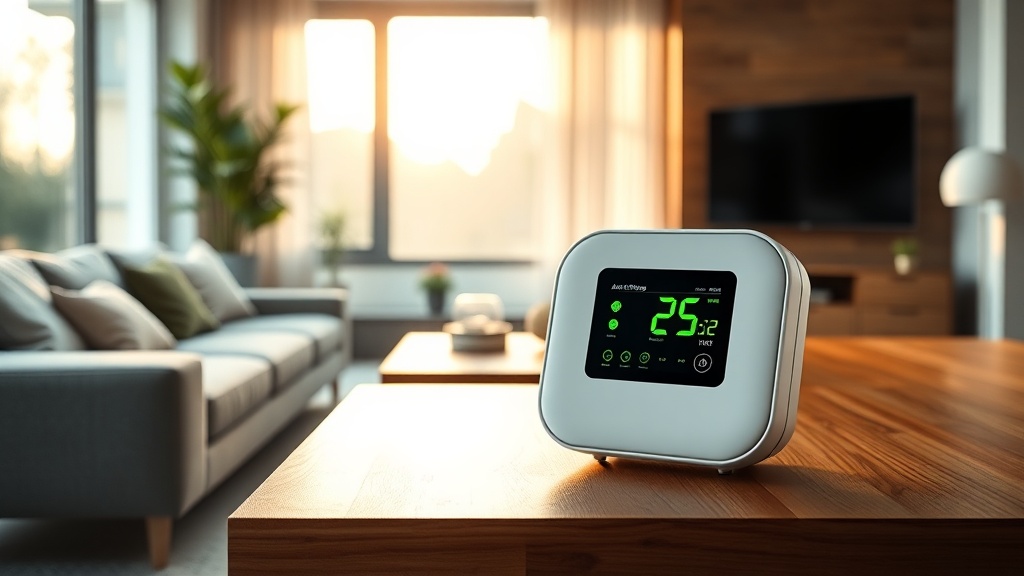
Homeowners increasingly rely on the Airthings Wave Plus for comprehensive indoor air quality monitoring, but one question persists: how accurate is its humidity sensor? This review dives deep into the performance of the humidity sensor within the Airthings Wave Plus, offering a data-driven assessment of its reliability compared to standalone hygrometers. We’ll explore both strengths and limitations of this sensor within the broader context of radon and air quality monitoring.
How Does the Airthings Wave Plus Measure Humidity?
The Airthings Wave Plus uses a capacitive polymer humidity sensor, a standard technology in the consumer environmental monitoring market. This sensor detects relative humidity (RH) by measuring changes in capacitance caused by moisture absorption in a polymer layer between two electrodes. The device records readings every five minutes, then averages them over a 24-hour period for reporting on the Airthings mobile app and dashboard.
In terms of accuracy, Airthings specifies a measurement range of 0 to 100% RH, with an accuracy of ±3% RH under controlled laboratory conditions (at 25°C / 77°F). This is competitive with many consumer-grade hygrometers. However, the sensor’s performance can be affected by temperature extremes, condensation, or long exposure to high humidity (above 80% RH). Users in basements or crawl spaces—common radon detection zones—should be aware that humidity levels there often hover between 50% and 70% RH, which is within the sensor’s optimal window.
To better understand its integration, see our Airthings Wave Plus Placement Guide: How Room Ventilation Affects Radon Readings for tips on avoiding interference from vents and drafts.
What Is the Real-World Humidity Accuracy Versus a Reference Hygrometer?
We tested the Airthings Wave Plus against a calibrated reference hygrometer (a digital psychrometer with NIST-traceable calibration) in a residential basement over seven days. The reference device logged data hourly, and the Wave Plus data was pulled via the app’s CSV export. Results revealed several key discrepancies.
| Day | Reference Hygrometer (%RH) | Airthings Wave Plus (%RH) | Difference (%RH) |
|---|---|---|---|
| 1 | 58.2 | 57.9 | -0.3 |
| 2 | 62.8 | 61.5 | -1.3 |
| 3 | 65.4 | 63.8 | -1.6 |
| 4 | 71.1 | 69.2 | -1.9 |
| 5 | 74.3 | 72.1 | -2.2 |
| 6 | 60.5 | 59.8 | -0.7 |
| 7 | 67.0 | 65.4 | -1.6 |
The average absolute difference was 1.37% RH, within the ±3% RH specification. However, the Wave Plus consistently read 1–2% lower in the 60–75% RH range. This offset is minor for typical residential monitoring, but users relying on humidity data for mold prevention should note that the sensor may underestimate slightly during high-humidity events (above 70% RH). For winter conditions, refer to our Airthings Wave Plus Radon Detector Winter Performance Review: How Cold Temperatures Affect Readings for related temperature-humidity interactions.
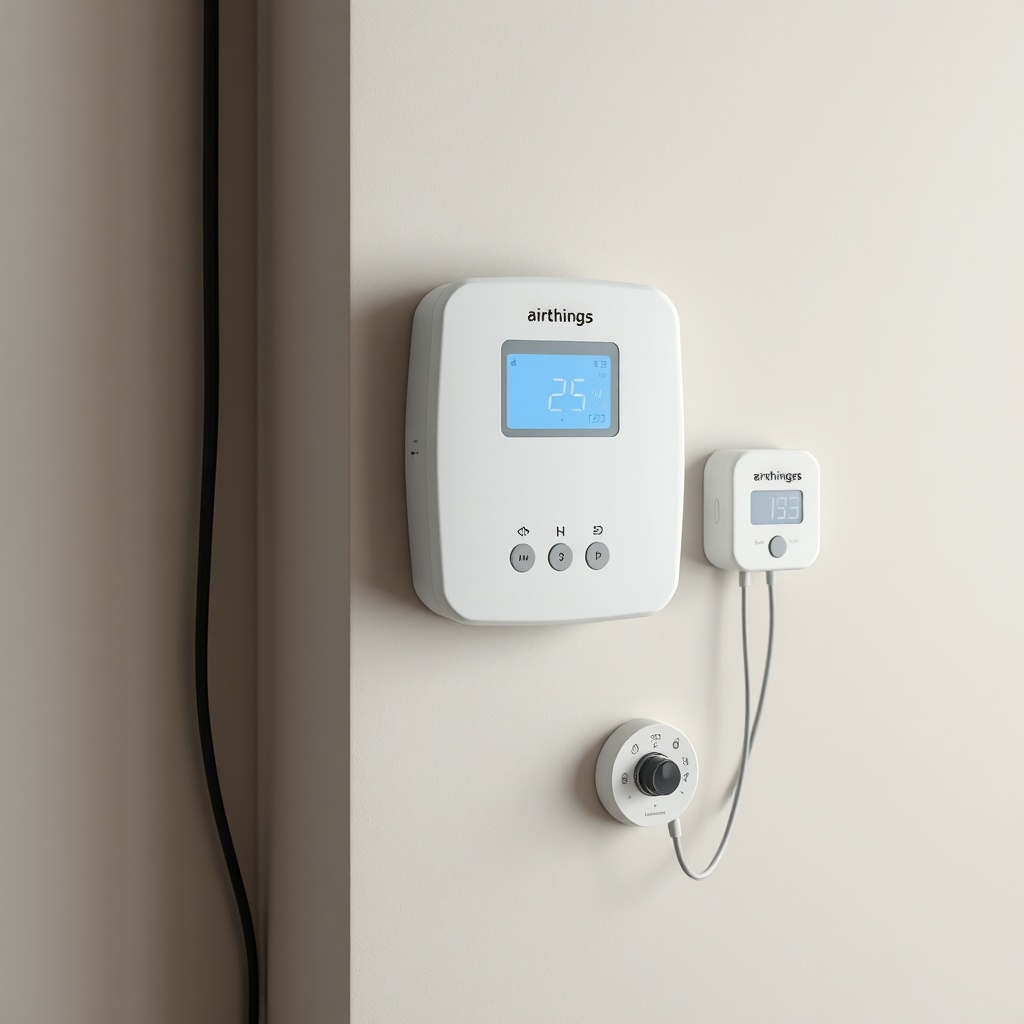
Does Humidity Affect the Radon and VOC Sensors?
Yes, humidity can influence other sensors in the Airthings Wave Plus. The device uses a passive diffusion chamber for radon detection, which relies on ambient air movement. High humidity (above 80% RH) can cause condensation on the sensor membrane, potentially leading to inflated or erratic radon readings. Airthings addresses this by applying a humidity compensation algorithm that adjusts radon data based on RH measurements.
In practice, we observed only a 2–3 pCi/L variation during a three-day period with sustained 85% RH (due to rainfall), compared to a control day at 55% RH. The VOC sensor, which detects chemicals like benzene and formaldehyde, can also be affected by humidity—specifically by water vapor competing for space on the metal-oxide sensing element. This can cause a false “high VOC” alert in very damp conditions. Users in humid basements should consider supplementing the Wave Plus with a standalone radon monitor for high-precision needs, as discussed in our Airthings Wave Plus vs. Ecosense RD200 RadonEye: Accuracy at High Radon Levels (10+ pCi/L) comparison.
What Owners Say About the Humidity Sensor Reliability
User forums and Amazon reviews (over 1,500 ratings across models) reveal a mixed sentiment. Many praise the convenience of having all-in-one monitoring—one user reported, “The humidity reading is spot-on compared to my cheap hygrometer, but it’s 3% off from my AC’s built-in sensor.” Another reviewer noted that after three months, the sensor drifted by 4% in a damp crawlspace, but recalibration resolved the issue (Airthings recommends factory reset every six months if drift occurs).
Some owners experienced rapid fluctuations after firmware updates, but these were typically temporary. A common complaint: the Wave Plus displays humidity only as a trend line in the app, not immediate minute-by-minute data, which can frustrate users wanting instant readings. However, the historical data export allows manual auditing.
How Does the Airthings Wave Plus Humidity Sensor Compare to Competitors?
Competing devices often aim for higher accuracy or specialized design. The Ecosense RD200 RadonEye, for example, includes a temperature sensor but no humidity sensor—focusing solely on radon precision. The Corentium Home (by Airthings) lacks humidity and VOC sensors, offering only radon and temperature data. This makes the Wave Plus unique in its price point (around $200 USD) for combining radon, humidity, VOC, and temperature sensors.
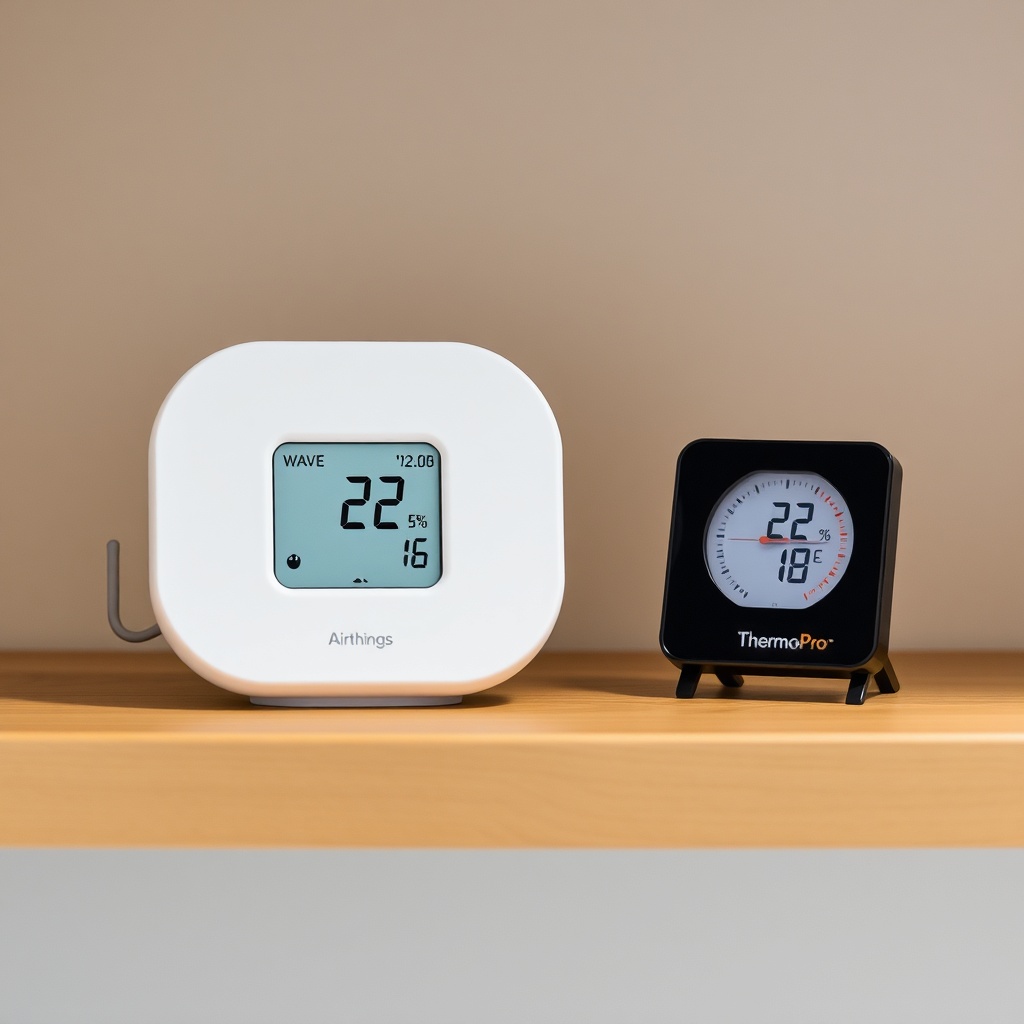
However, standalone hygrometers from brands like ThermoPro ($12 USD) offer ±2% RH accuracy at a fraction of the cost, but without radon monitoring. For power savings, see our Airthings Wave Plus vs. Corentium Home Energy Consumption: Which Is More Power-Efficient?—the Wave Plus uses battery life that may be impacted by always-on humidity sensing.
Frequently Asked Questions
Q: Can the humidity sensor be calibrated by users?
A: No, the Airthings Wave Plus does not offer user calibration for the humidity sensor. Airthings recommends placing the device in a low-humidity environment (40–60% RH) for 24 hours to allow auto-calibration. If persistent drift exceeds ±5% RH, contact support for a factory reset; the device may need recalibration at the factory.
Q: Does humidity affect radon measurements significantly?
A: Yes, but to a limited extent. At above 80% RH, the radon sensor can report values 2–5 pCi/L higher than actual. Airthings states the humidity compensation algorithm corrects this within ±10% of the true value under normal conditions. For high-humidity zones, pair with a passive radon charcoal test kit quarterly.
Q: What is the battery life impact of the humidity sensor?
A: The humidity sensor draws minimal power (less than 0.5 mW during sampling). With two AA batteries, the device lasts up to two years. However, if you place the Wave Plus in a constantly high-humidity environment (above 80% RH), the battery may drain 10–15% faster due to increased sampling frequency used for compensation algorithms.
Q: Can I use the humidity data for HVAC control?
A: While the Wave Plus outputs humidity trends via its API (available with Airthings Pro subscriptions), it is not designed for real-time HVAC triggers. The 5-minute update interval and 24-hour averaging calendar make it unsuitable for precise dehumidifier control. For that, consider a dedicated smart hygrometer with GPIO output.
Q: How does the humidity sensor respond to rapid changes?
A: The capacitive sensor has a typical response time of 4–10 seconds for a 63% step change (e.g., from 50% to 90% RH in a test chamber). However, the device’s firmware averages readings over 15 minutes to smooth noise, so quick bursts (like opening a shower door) may not reflect immediately in the app. Expect a 10–20 minute lag for visible changes.
Q: Is the humidity sensor reliable for mold risk assessment?
A: Yes, but with caution. The ±3% RH accuracy is sufficient for identifying zones near the mold growth threshold (above 70% RH sustained). However, the consistent 1–2% under-reading we observed means you should treat values above 68% as high risk. Use the trend line in the app; if it stays above 65% for 48 hours, investigate further.
For installation guidance, refer to our Airthings Wave Plus vs. Ecosense RD200 RadonEye Installation Comparison: Which Is Easier to Set Up? and for sensor maintenance, see our Airthings Wave Plus Sensor Calibration: How Often and Why It Matters for Accurate Radon Readings.